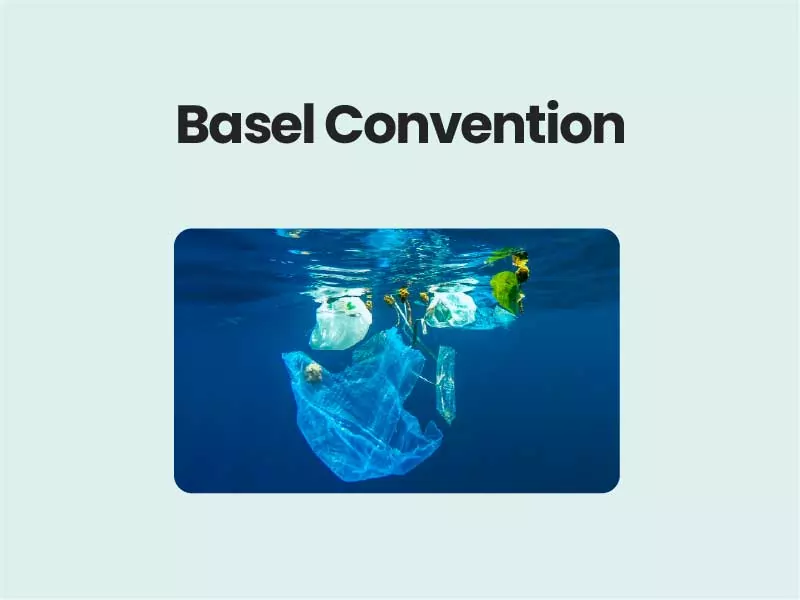
Basel Convention
Basel Convention is an international treaty that was designed to reduce the movements of hazardous waste between nations, and specifically to prevent the transfer of hazardous waste from developed to less developed countries (LDCs). It does not address the movement of radioactive waste.
The Convention is also intended to minimize the amount and toxicity of wastes generated, to ensure their environmentally sound management and to assist LDCs in the environmentally sound management of the hazardous and other wastes they generate. It was opened for signature on 22 March 1989 and entered into force on 5 May 1992. As of October 2018, 186 states and the European Union are parties to the Convention.
Haiti and the United States have signed the Convention but not ratified it.
Provisions
The provisions of the Convention centre around the following principal aims:
- The reduction of hazardous waste generation and the promotion of environmentally sound management of hazardous wastes, wherever the place of disposal;
- The restriction of transboundary movements of hazardous wastes except where it is perceived to be in accordance with the principles of environmentally sound management.
- Regulatory system applying to cases where transboundary movements are permissible.
Aim
- States require to observe the fundamental principles of environmentally sound waste management (article 4).
- Hazardous wastes may not be exported to Antarctica, to a State, not a party to the Basel Convention, or to a party having banned the import of hazardous wastes (article 4).
- Parties may, however, enter into bilateral or multilateral agreements on hazardous waste management with other parties or with non-parties, provided that such agreements are “no less environmentally sound” than the Basel Convention (article 11).
- The Basel Convention also provides for cooperation between parties, ranging from exchange of information on issues relevant to the implementation of the Convention to technical assistance, particularly to developing countries (articles 10 and 13).
- Convention attributes responsibility to one or more of the States involved, and imposes the duty to ensure safe disposal, either by re-import into the State of generation or otherwise (articles 8 and 9).
- The Convention also provides for the establishment of regional or sub-regional centres for training and technology transfers regarding the management of hazardous wastes and other wastes and the minimization of their generation to cater to the specific needs of different regions and sub-regions (article 14).
Fourteen such centres have been established. They carry out training and capacity building activities in the regions.
Amending the Basel Convention
- Parties to the Basel Convention have reached agreement on a legally-binding, globally-reaching mechanism for managing plastic waste.
- The Geneva meeting amended the 1989 Basel Convention on the control of hazardous wastes to include plastic waste in a legally-binding framework.
- The new amendment would empower developing countries to refuse “dumping plastic waste” by others.
- The resolution means contaminated and most mixes of plastic wastes will require prior consent from receiving countries before they are traded, with the exceptions of mixes of PE, PP and PET.
- Developed countries like the U.S. and Canada have been exporting their mixed toxic plastic wastes to developing Asian countries claiming it would be recycled in the receiving country.
Involvement of India
Recently the 4th meeting of the Conference of the Parties (COP) to Basel Convention was held.
The theme of the 2019 meeting was- “Clean Planet, Healthy People: Sound Management of Chemicals and Waste”.
An Indian delegation of Ministry of Environment, Forest and Climate Change (MoEFCC) and along with other ministers participated in the joint meeting and set a tone at COP.
In Basel Convention on Control of Transboundary Movement of Hazardous Wastes and their Disposal, two important issues were mainly discussed and decided i.e. technical guidelines on e-waste and inclusion of plastic waste in Prior Informed Consent (PIC) procedure.
India’s stand
In view of growing consumption of electronic equipment and waste across world, India highlighted that technical guidelines provision in name of re-use, repair, refurbishment and failure leads to the possibility of e-waste dumping from the developed world to the developing countries. So, Indian delegation strongly objected the proposed decision on these guidelines during plenary and did not allow it to be passed by the conference of parties (COP).
Outcome
On the final day of COP, a modified decision was adopted in which all concerns raised by India were incorporated. This thereby opened a window for further negotiations and corrections in draft technical guidelines on e-waste.
Read Also Green Hydrogen / Green Ammonia Policy
Enroll today with the best civils service academy and take your first step towards your Civils journey.
Feel free to reach out to us for any inquiries, collaborations, or support. We’re here to help.