
India US Relations
India – US Relations India-U.S. bilateral relations have developed into a “global strategic partnership”, based on shared democratic values, and growing convergence of interests on bilateral, regional, and global issues. Regular exchange of high-level political visits, vibrant people-to-people interaction, and support across the political spectrum in both countries have nurtured and provided with sustained momentum in this bilateral relationship. India-USA Relation – Background During the cold war, India got tilted towards the Soviet Union after the 1971 Friendship Treaty, which was a response to the continuing U.S. tilt towards Pakistan and the beginnings of convergence between US and China But in the post-cold war era, there has been a convergence in the interests of India and USA which can be attributed to several factors like – shift in global geopolitics in the post-Cold War era, India’s economic ascent, the rise of an assertive China, and India’s place on the global high table. Thus, the relation between India and the US transformed from being Estranged democracies (during the cold war) to Strategic partners (in the post-cold war era). Over the years, India-US relations have become increasingly multi-faceted, covering cooperation in areas such as trade, defense and security, education, science and technology, civil nuclear energy, space technology and applications, environment, and health. Areas of Cooperation Shared ideals – The U.S-India partnership has its foundation in common values, including the rule of law and democratic principles, interests in promoting global security, stability, and economic prosperity through trade, investment, and connectivity. Economic relations – US is India’s largest trading partner and inbound FDI from the US is more than $50 billion. In 2019, overall U.S.-India bilateral trade in goods and services reached $146.1 billion. Energy cooperation – US India launched a bilateral Strategic Energy Partnership in 2018 to enhance energy security, bolster strategic alignment, etc India has started importing Crude and LNG from US recently. Investment by Indian companies like Reliance, Essar and GAIL in the U.S. natural gas market is ushering in a new era of India-U.S. energy partnership. Nuclear Cooperation – India US Civil Nuclear Cooperation Agreement was signed in 2008. Signing of commercial agreement for Westinghouse (US Company) to build six nuclear reactors in Andhra Pradesh. High-Level Dialogue Mechanisms – India and the U.S. have more than 50 bilateral inter-governmental dialogue mechanisms for exchange of views on issues of mutual interest. 2+2 Annual Ministerial Dialogue is led by the Foreign and the Defence Ministers of India and then U.S. counterparts. Global Partnership – both are part of Quad grouping, and collaborate on forums like East Asia Summit, G-20 U.S has expressed strong support for India’s candidature for a permanent seat/role in an expanded UN Security Council and for India’s early entry into the Nuclear Suppliers Group also, US expressed interest to India’s integration to G-7 Defence Cooperation – Defence relationship has emerged as a major pillar of India-U.S. strategic partnership with the signing of ‘New Framework for India-U.S. Defence Relations’ in 2005. In 2014 US emerged as the top arms supplier to India by overtaking Russia. The U.S. categorized India as “a Major Defence Partner” in 2016 US moved India up into Tier-I of “Strategic Trade Authorization” for unlicensed export of sensitive Defence items to India. India conducts more exercises with US forces than with any other country – Yudh Abhyas, Vajra Prahar, etc. India US has signed the 4 Defence Foundational agreements. Strategic Convergence – Balancing China’s rise in the international system, and more particularly in the Indo-Pacific region, is a clear strategic convergence between India and the United States. The recently unveiled US Security Strategy recognizes India as a “leading global power” and “stronger strategic and defence partner” and seeks to increase quadrilateral cooperation with Japan, Australia, and India. Development of Indo-pacific – The US under its Pivot to Asia policy and Indo-Pacific Strategy views India as an ideal balancer to check the aggressive rise of China. Diaspora & people-to-people ties – Strength of Indian diaspora in US is around 4.5 million which is around 1% of its population. Indian Diaspora is acting as a catalyst to forge closer and stronger ties between India and the US. Collaboration in Science & Technology – a joint mission of ISRO and NASA is set to be launched in 2022, the world’s 1st dual-frequency Synthetic Aperture Radar satellite. A bilateral Joint Working Group on Civil Space Cooperation provides a forum for discussion on joint activities in space. Counter-Terrorism – India-U.S. Counter-Terrorism Cooperation Initiative was signed in 2010 to expand collaboration on counterterrorism, information sharing and capacity building US helped India in designating Jaish-e-Mohammad chief Masood Azhar as a global terrorist under UN Security Council Resolution 1267, and in placing Pakistan on grey-list of the Financial Action Task Force Cooperation in combating Covid-19 pandemic – India and the U.S have enhanced collaboration in R&D, especially in pharmaceuticals, therapeutics, and vaccine development Indian vaccine companies are collaborating with US based agencies to develop and produce a vaccine against COVID-19 on a rapid platform Challenges in India-US Relationship Challenges in balancing India’s multi-faceted relationships with Iran and Russia India has been forced to stop concessional oil imports from Iran and Russia, and these heavy-handed American tactics have led to sharp rise in India’s oil import bill India-US interests clashed when India decided to the Russian made S-400 Triumph missile defense system despite threats of American sanctions US-Pakistan Relationship – Despite Washington’s claims to having de-hyphenated its relations with India and Pakistan, the US has not been able to extricate itself from the liabilities of its complex alliance with Pakistan. Trade Disputes – US recently removed India from its Generalized System of Preference (GSP) program, of which India was a huge beneficiary US levied tariffs on steel and aluminium products impacting Indian exports India has been referred by the US, as “tariff king” that imposes “tremendously high” import duties. WTO disputes – India USA are involved in WTO disputes on issues like, Capping prices of medical devices by India, greater Indian market access for American agriculture and dairy products etc. IPR conflicts – India is also on U.S.’s “Priority Watch List” which identifies countries posing challenges to American intellectual property rights. Currency manipulator tag for India – Recently, the United States added India to the ‘monitoring list’ of currency manipulating countries. Internal Issues in India – criticism from the US Congress and some parts of US civil society is pushing the US administration to tell India
AntiMicrobial Resistance
Antimicrobial Resistance Antimicrobials – including antibiotics, antivirals, antifungals and antiparasitic – are medicines used to prevent and treat infections in humans, animals and plants. Antimicrobial Resistance (AMR) occurs when bacteria, viruses, fungi and parasites change over time and no longer respond to medicines making infections harder to treat and increasing the risk of disease spread, severe illness and death. As a result of drug resistance, antibiotics and other antimicrobial medicines become ineffective and infections become increasingly difficult or impossible to treat. Antimicrobial resistance (AMR) is a global health and development threat. It requires urgent multisectoral action in order to achieve the Sustainable Development Goals (SDGs). WHO has declared that AMR is one of the top 10 global public health threats facing humanity. Misuse and overuse of antimicrobials are the main drivers in the development of drug-resistant pathogens. Lack of clean water and sanitation and inadequate infection prevention and control promotes the spread of microbes, some of which can be resistant to antimicrobial treatment. The cost of AMR to the economy is significant. In addition to death and disability, prolonged illness results in longer hospital stays, the need for more expensive medicines and financial challenges for those impacted. Without effective antimicrobials, the success of modern medicine in treating infections, including during major surgery and cancer chemotherapy, would be at increased risk. Read Making India a biotech hub Enroll today with the best civils service academy and take your first step towards your Civils journey. Feel free to reach out to us for any inquiries, collaborations, or support. We’re here to help. JOIN NOW
International Counter Terrorism Conference 2022
International Counter Terrorism Conference 2022 The International Counter Terrorism Conference 2022 was organised by the Global Counter Terrorism Council (GCTC). Emergence of new “religiophobia”, especially against Hindus, Buddhists and Sikhs, is a matter of serious concern and needs to be recognised, just like Christianophobia, Islamophobia and anti-semitism, to bring a balance in discussions on such issues. In the past two years, several Member States have been trying to label terrorism into categories such as racially and ethnically motivated violent extremism, violent nationalism, right wing extremism, etc. Calling it a “dangerous” tendency, India said this goes against some of the accepted principles agreed to by all UN Member States in the recently adopted Global Counter-Terrorism Strategy. Read Also India and Terrorism India’s annual resolution on the issue of counter-terrorism was adopted by consensus in the First Committee of the United Nations General Assembly (UNGA). India, a victim of state-sponsored cross-border terrorism, has been at the forefront in highlighting the serious threat to international peace and security emanating from acquisition of weapons of mass destruction by terrorist groups. India is a member of FATF whose objective is to set standards and promote effective implementation of legal, regulatory and operational measures for combating money laundering, terrorist financing and other related threats to the integrity of the international financial system. Amid growing fears that terrorists will again nest in Afghanistan and increase attacks in Africa, India’s foreign minister has recently urged for the adoption of the convention. Read Also Bioterrorism Enroll today with the best civils service academy and take your first step towards your Civils journey. Feel free to reach out to us for any inquiries, collaborations, or support. We’re here to help. join now
UPSC Mains Answer Writing Practice Test 6 – Essay
Write any one of the following essays in 1000-1200 words (125 marks) Check All Mains Questions 1. “Indian democracy : A beacon of hope”2. “It always seems impossible until it’s done.”3. “An investment in knowledge pays the best interest”4. “Success is not final; failure is not fatal: It is the courage to continuethat counts. Enroll today with the best civils service academy and take your first step towards your Civils journey. Feel free to reach out to us for any inquiries, collaborations, or support. We’re here to help. join now
Vikas Engine
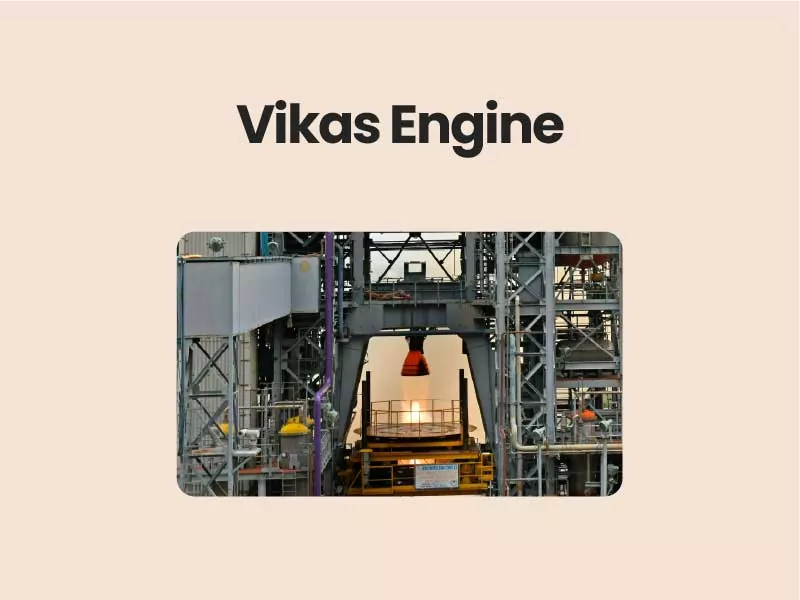
Vikas Engine The Indian Space Research Organisation (ISRO) recently conducted a successful qualification test of its High Thrust VIKAS Engine at the ISRO Propulsion Complex (IPRC) in Tamil Nadu’s Mahendragiri. The Vikas engine will power the ambitious Gaganyaan mission into space. It is a family of liquid fuelled rocket engines. It is used in the Polar Satellite Launch Vehicle (PSLV) and the Geosynchronous Satellite Launch Vehicle (GSLV) series of expendable launch vehicles for space launch use. With this launch, India will become the fourth nation in the world to launch a Human Spaceflight Mission after the USA, Russia and China. The objective of the Gaganyaan programme is to demonstrate the capability to send humans to low earth orbit on board an Indian launch vehicle and bring them back to earth safely. Enroll today with the best civils service academy and take your first step towards your Civils journey. Feel free to reach out to us for any inquiries, collaborations, or support. We’re here to help. join now
K-Shaped Economic recovery
K-Shaped Economic recovery A K-shaped recovery occurs when, following a recession, different parts of the economy recover at different rates, times, or magnitudes. This is in contrast to an even, uniform recovery across sectors, industries, or groups of people. A K-shaped recovery leads to changes in the structure of the economy or the broader society as economic outcomes and relations are fundamentally changed before and after the recession. This type of recovery is called K-shaped because the path of different parts of the economy when charted together may diverge, resembling the two arms of the Roman letter “K.” According to the latest round of ICE360 Survey 2021, K-shaped recovery emerges from the economy hit by the coronavirus pandemic. The survey was conducted by People’s Research on India’s Consumer Economy (PRICE), a Mumbai- based think-tank. Read Also Production Linked Incentive Schemes Enroll today with the best civils service academy and take your first step towards your Civils journey. Feel free to reach out to us for any inquiries, collaborations, or support. We’re here to help. join now
Environment Management Plan for Najafgarh Jheel
Environment Management Plan for Najafgarh Jheel The National Green Tribunal (NGT) has directed Delhi and Haryana to enforce the Environment Management Plan (EMP) that the two governments have prepared for the rejuvenation and protection of the Najafgarh Jheel, a transboundary wetland. The implementation of these action plans is to be monitored by the National Wetland Authority through the respective State Wetland Authorities. Earlier, the Union Environment Ministry had set up a three-member committee to prepare an integrated EMP. The top priority would be to notify the Najafgarh jheel and its area of influence under The Wetlands (Conservation and Management) Rules, 2017. It lists immediate measures to be taken including demarcating the boundary of the wetland using geo-tagged pillars, and commissioning a hydrological assessment and species inventory. Medium-term measures to be implemented in two to three years include in-situ treatment of major drains meeting the Najafgarh jheel, regular monitoring of the waterbird population, and relocating flow obstructions such as power sub-stations. It also proposes a detailed estimation of sewage generation in the area considering 15 years of projected population, and identification of all drains contributing to pollution in the jheel. It is located in a natural depression in southwest Delhi, close to the Gurugram-Rajokri border on National Highway-48. The lake is largely filled with sewage from Gurugram and surrounding villages of Delhi. A portion of the lake falls in Haryana. The presence of 281 bird species, including several threatened ones such as Egyptian vulture, Sarus Crane, Steppe Eagle, Greater Spotted Eagle, Imperial Eagle and those migrating along the Central Asian Flyway has been reported at the lake. Read Also Deepor Beel Najafgarh Jheel The Najafgarh Jheel is a critical natural infrastructure for the region, buffering floods, treating wastewater, recharging groundwater (with high potential for water supply to significant population) and providing habitat to numerous plant, animal and bird species. It can regulate the microclimate by virtue of being a heat and carbon sink. In fact, if the EMPs are properly and fully implemented, the jheel can become central to the National Capital Region’s ability to mitigate the local effects of climate change. Enroll today with the best civils service academy and take your first step towards your Civils journey. Feel free to reach out to us for any inquiries, collaborations, or support. We’re here to help.Lorem ipsum dolor sit amet, consectetur adipiscing elit. Ut elit tellus, luctus nec ullamcorper mattis, pulvinar dapibus leo. join now
Negative Ion Technology
Negative Ion Technology The Authority for Nuclear Safety and Radiation Protection (ANVS), Netherlands issued a statement identifying various negative ion wearable products containing more Radioactivity than legally permitted. Negative ion technology embeds negative ions in personal products and is currently being advertised as a means to maintain health, balance energy, and improve well-being. This technology is used in certain silicone wristbands, quantum or scalar-energy pendants, and kinesthesiology tape. The minerals that produce these negative ions often include naturally occurring radioactive substances such as uranium and thorium. It is believed that negative ions create positive vibes and uplift the mood. They show the various mental and physical health benefits, such as stress reduction, better sleeping, respiration etc. whereas these ions may also act on pollutants, make them negatively charged and get them collected on surfaces. Enroll today with the best civils service academy and take your first step towards your Civils journey. Feel free to reach out to us for any inquiries, collaborations, or support. We’re here to help. join now
Lithium Mining
Lithium Mining The Serbia government has revoked the licenses for lithium mining to Rio Tinto, an Anglo-Australian multinational mining organisation, following protests for nearly two months. Serbians have been protesting against Rio Tinto’s plans to mine lithium in the Jadar valley near Lozinca town in the country. Rio Tinto had discovered lithium deposits in the country in 2006 and had bought land in the Lozinca area in Serbia the mine would have produced enough lithium to operate one million electric vehicles along with boric acid and sodium sulphate. While Rio Tinto has said to be fulfilling all Serbia’s and European Union’s environmental standards, protestors have been pointing out that lithium mining in the $2.4-billion project would irrevocably pollute the drinking water. Read Also Umngot River Serbian capital Belgrade is surrounded by lignite mines and coal power plants powered by these mines, which only make the pollution worse. First traces of Lithium in India were discovered in Karnataka’s Mandya district recently. The preliminary find is relatively small: a mere 1,600 tonnes of lithium deposits. Chile, on the other hand, has an estimated reserves of 9.2 million tonnes. If oil powered the world in the 20th century, Lithium could play the same role in the 21st century. Naturally, even a small find commands great importance. Echoing a similar sentiment, the discovery is being given importance at the highest levels of government. This also shows the amount of effort and investment that lithium is likely to garner in the years ahead. Enroll today with the best civils service academy and take your first step towards your Civils journey. Feel free to reach out to us for any inquiries, collaborations, or support. We’re here to help. join now
Central Asia Meet
Central Asia Meet This first India-Central Asia coincided with the 30th anniversary of establishment of diplomatic relations between India and Central Asian countries. The summit came two days after a similar China-Central Asia Conference was held where China offered USD 500 million in assistance and pledged to ramp up trade to USD 70 billion from the present levels of about USD 40 billion a year. Discussed the next steps in taking India-Central Asia relations to new heights. In a historic decision, the Leaders agreed to institutionalise the Summit mechanism by deciding to hold it every 2 years. They also agreed on regular meetings of Foreign Ministers, Trade Ministers, Culture Ministers and Secretaries of the Security Council to prepare the groundwork for the Summit meetings. An India-Central Asia Secretariat in New Delhi would be set up to support the new mechanism. The summit is symbolic of the importance attached by the leaders of India and the Central Asian countries to a comprehensive and enduring India-Central Asia partnership. It is being held at a critical juncture when tensions between the West and Russia and the United States (US) and China are rising. India too has faced geopolitical setbacks: Border tensions with China and the Taliban takeover of Afghanistan. It follows President Vladimir Putin’s visit to India, which may have allowed India to push Russia to moderately balance China in Eurasia and to contain the threats from Afghanistan. The recent unrest in Kazakhstan also showed that “new actors” are vying for influence in the region though their motives are still not clear. India has always maintained excellent diplomatic ties with all the five Central Asian states, Indian PMs including Prime Minister Narendra Modi in 2015, have visited them. Yet, India’s trade with them has been only at USD 1.4 billion in 2019. In 2017, India joined the Shanghai Cooperation Organisation (SCO) to engage with the region. But SCO is only a sluice gate to regulate the Russian and Chinese subliminal rivalry to prevent either power from dominating the region. The summit is a massive stride for India’s diplomacy. Since the region is a critical lynchpin to India’s security policy, the summit will have a waterfall impact to facilitate India’s multifaceted approach towards the region. Enroll today with the best civils service academy and take your first step towards your Civils journey. Feel free to reach out to us for any inquiries, collaborations, or support. We’re here to help. join now