
Atmanirbhar Bharat Abhiyan
Atmanirbhar Bharat Abhiyan Atmanirbhar Bharat Abhiyan is aimed at incentivising the creation of new employment opportunities during the Covid-19 economic recovery phase. It will provide subsidy for provident fund contribution for adding new employees to establishments registered with the Employees’ Provident Fund Organisation (EPFO). Any new employee joining employment in EPFO registered establishments on monthly wages less than Rs. 15,000. Significance of Atmanirbhar Bharat Abhiyan : The reforms will encourage investments in food processing and together with the infrastructure outlays will contribute in shaping a competitive Agri value chain, reduce wastages and raise farmer incomes. Rs 40,000 crore increase in allocation for MGNREGS to provide employment boost: The Government will now allocate an additional Rs 40,000 crore under MGNREGS. It will help generate nearly 300 crore person days in total addressing need for more work including returning migrant workers in Monsoon season as well. Creation of larger number of durable and livelihood assets including water conservation assets will boost the rural economy through higher production. Increased investments in Public Health and other health reforms to prepare India for future pandemics: Public Expenditure on Health will be increased by investing in grass root health institutions and ramping up Health and Wellness Centres in rural and urban areas. Setting up of Infectious Diseases Hospital Blocks in all districts and strengthening of lab network and surveillance Integrated Public Health Labs in all districts & block level Labs & Public Health Unit to manage pandemics. Further, National Institutional Platform for One health by ICMR will encourage research. And the implementation of National Digital Health Blueprint under the National Digital Health Mission. Technology Driven Education with Equity post-COVID: Public Expenditure on Health will be increased by investing in grass root health institutions and ramping up Health and Wellness Centres in rural and urban areas. Setting up of Infectious Diseases Hospital Blocks in all districts and strengthening of lab network and surveillance by Integrated Public Health Labs in all districts & block level Labs & Public Health Unit to manage pandemics. Further, National Institutional Platform for One health by ICMR will encourage research. And the implementation of National Digital Health Blueprint under the National Digital Health Mission. PM eVIDYA, a programme for multi-mode access to digital/online education to be launched immediately. Manodarpan, an initiative for psycho-social support for students, teachers and families for mental health and emotional well-being to be launched immediately as well. New National Curriculum and Pedagogical framework for school, early childhood and teachers will also be launched. National Foundational Literacy and Numeracy Mission for ensuring that every child attains Learning levels and outcomes in grade 5 Further enhancement of Ease of Doing Business through IBC related measures: The minimum threshold to initiate insolvency proceedings has been raised to Rs. 1 crore (from Rs. 1 lakh, which largely insulates MSMEs). Special insolvency resolution framework for MSMEs under Section 240A of the Code will be notified soon. Suspension of fresh initiation of insolvency proceedings up to one year, depending upon the pandemic situation. Empowering Central Government to exclude COVID 19 related debt from the definition of “default” under the Code for the purpose of triggering insolvency proceedings. Decriminalisation of Companies Act defaults Decriminalisation of Companies Act violations involving minor technical and procedural defaults such as shortcomings in CSR reporting, inadequacies in Board report, filing defaults, delay in holding of AGM. The Amendments will de-clog the criminal courts and NCLT. 7 compoundable offences altogether dropped and 5 to be dealt with under alternative framework Ease of Doing Business for Corporates: Direct listing of securities by Indian public companies in permissible foreign jurisdictions. Private companies which list NCDs on stock exchanges not to be regarded as listed companies. Including the provisions of Part IXA (Producer Companies) of Companies Act, 1956 in Companies Act, 2013. Power to create additional/ specialized benches for NCLAT Lower penalties for all defaults for Small Companies, One-person Companies, Producer Companies & Start-Ups. Public Sector Enterprise Policy for a New, Self-reliant India: List of strategic sectors requiring the presence of PSEs in the public interest will be notified In strategic sectors, at least one enterprise will remain in the public sector but the private sector will also be allowed In other sectors, PSEs will be privatized (timing to be based on feasibility etc.) To minimise wasteful administrative costs, number of enterprises in strategic sectors will ordinarily be only one to four; others will be privatised/ merged/ brought under holding companies Increase borrowing limits of States from 3% to 5% for 2020-21 only & promoting State-level reforms: Centre has decided to increase borrowing limits of States from 3% to 5% for 2020-21 only. This will give States extra resources of Rs. 4.28 lakh crore. Part of the borrowing will be linked to specific reforms (including recommendations of the Finance Commission). Reform linkage will be in four areas: universalisation of ‘One Nation One Ration card’, Ease of Doing Business, Power distribution and Urban Local Body revenues. A specific scheme will be notified by the Department of Expenditure on the following pattern: Unconditional increase of 0.50% 1% in 4 tranches of 0.25%, with each tranche linked to clearly specified, measurable and feasible reform actions Further 0.50% if milestones are achieved in at least three out of four reform areas Challenges: Lack of Demand Backward and Forward Linkages Burgeoning Fiscal Deficit Difficulty in Mobilising Finances Issues Related to Liquidity Way forward: Holistic Reforms Enhancing Demand Mobilising Finances Enroll today with the best civils service academy and take your first step towards your Civils journey. Feel free to reach out to us for any inquiries, collaborations, or support. We’re here to help. contact us
Reassessing Export Led Growth Model
Reassessing Export Led Growth Model Export led growth is where a significant part of the expansion of real GDP, jobs and per capita incomes flows from the successful exporting of goods and services from one country to another. India has focused on domestic-demand led growth. But there is no known model of domestic demand/consumption-led growth, anywhere that has delivered quick, sustained, and high rates of economic growth for developing countries. Geo-Economic Scenario: · The changing international environment · Structural Issues Cheap Imports Depopulation, Declining productivity, High debt. Deglobalization. Market-Reforms Way forward: To improve infrastructure Need to build strong domestic demand. Needs to invest in its education, research & innovation capabilities Easy credit Economic Decentralisation Import substitution strategy. Foster innovation Develop skills Reduce barriers to doing business. The ability of India’s export growth to outpace that of the rest of the world— as indeed it has done spectacularly for three decades—will be increasingly constrained. Both exports of manufacturing and services are skill-intensive and becoming more so, and if the quality and quantity of skills available to the economy starts slowing (rising Lewis curve), exports will run into domestic supply 21 constraints Read Also Fiscal Federalism in India Enroll today with the best civils service academy and take your first step towards your Civils journey. Feel free to reach out to us for any inquiries, collaborations, or support. We’re here to help. JOIN NOW
Keoladeo National Park

The Keoladeo National Park or Keoladeo Ghana National Park is formerly known as the Bharatpur Bird Sanctuary is in Bharathpur District of Rajasthan. It is an important wintering ground of Palaearctic migratory waterfowl and is renowned for its large congregation of non-migratory resident breeding birds. A green wildlife oasis situated within a populated human-dominated landscape, some 375 bird species and a diverse array of other life forms have been recorded in this mosaic of grasslands, woodlands, woodland swamps, and wetlands of just 2,873 ha. This ‘Bird Paradise’ was developed in a natural depression wetland that was managed as a duck shooting reserve at the end of the 19th century. While hunting has ceased and the area declared a national park in 1982, its continued existence is dependent on a regulated water supply from a reservoir outside the park boundary. The park’s well-designed system of dykes and sluices provides areas of varying water depths that are used by various avifaunal species. Due to its strategic location in the middle of Central Asian migratory flyway and presence of water, large congregations of ducks, geese, coots, pelicans, and waders arrive in the winter. Keoladeo National Park The park was the only known wintering site of the central population of the critically endangered Siberian Crane, and also serves as a wintering area for other globally threatened species such as the Greater Spotted Eagle and Imperial Eagle. During the breeding season the most spectacular heronry in the region is formed by 15 species of herons, ibis, cormorants, spoonbills, and storks, were in a well-flooded year over 20,000 birds nest. The property has effective legal protection under the provisions of the Wildlife (Protection) Act, 1972 and the Indian Forest Act, 1927. This is the only park in India that is completely enclosed by a 2 m high boundary wall that minimizes the possibilities of any encroachment and biotic disturbances, but there is no possibility of a buffer zone. As the wetlands of Keoladeo are not natural, they are dependent on the monsoon and on water pumped in from outside, traditionally provided from the “Ajan Bandh” reservoir. The major threats to the property are the water supply (both quantity and quality); invasive vegetation (Prosopis, Eichhornia, Paspalum); and inappropriate use of the property by neighbouring villages.
National Recruitment Agency
National Recruitment Agency The National Recruitment Agency or NRA is an independent body that will conduct examinations for government jobs. The decision to set up the NRA was approved by the Union Cabinet on August 19, 2020. The agency will conduct a Common Eligibility Test for various government jobs. The Centre plans to use the CET score for all recruitments in the future. But, to begin with, this will be implemented only in three sectors. Salient features of National Recruitment Agency. The Common Eligibility Test will be held twice a year. There will be different CETs for graduate level, 12th Pass level and 10th pass level to facilitate recruitment to vacancies at various levels. The CET will be conducted in 12 major Indian languages. This is a major change, as hitherto examinations for recruitment to Central Government jobs were held only in English and Hindi. To begin with, CET will cover recruitments made by three agencies: viz. Staff Selection Commission, Railway Recruitment Board and the Institute of Banking Personnel Selection. This will be expanded in a phased manner. CET will be held in 1,000 centres across India in a to bid remove the currently prevalent urban bias. There will be an examination centre in every district of the country. There will be a special thrust on creating examination infrastructure in the 117 aspirational districts. CET will be a first level test to shortlist candidates and the score will be valid for three years. There shall be no restriction on the number of attempts to be taken by a candidate to appear in the CET subject to the upper age limit. Age relaxation for SC/ST and OBC candidates as per existing rules will apply. India – China Relations GS 2 Notes Advantages for students Removes the hassle of appearing in multiple examinations. Single examination fee would reduce the financial burden that multiple exams imposed. Since exams will be held in every district, it would substantially save travel and lodging cost for the candidates. Examination in their own district would encourage more and more women candidates also to apply for government jobs. Applicants are required to register on a single Registration portal. No need to worry about clashing of examination dates. Advantages for Institutions Removes the hassle of conducting preliminary / screening test of candidates. Drastically reduces the recruitment cycle. Brings standardization in the examination pattern. Reduces costs for different recruiting agencies. Rs 600 crore savings expected. The Government also plans to provide outreach and awareness facility to assist candidates in rural and far flung areas to familiarize them with the online examination system. 24×7 helpline will be set up for answering queries, complaints and queries.
Farmer’s Protest
Farmer’s Protest The Farmers’ Produce Trade And Commerce (Promotion And Facilitation) Bill, The Farmers (Empowerment and Protection) Agreement on Price Assurance and Farm Services Bill, and The Essential Commodities (Amendment) Bill — passed by the Parliament in the recently concluded Monsoon session. Farmer’s objections are mostly against the provisions of the first. And while there is no uniform demand among the protesters or a unified leadership, it emerges that their concerns are mainly about sections relating to “trade area”, “trader”, “dispute resolution” and “market fee” in the first bill. As many as 31 farmers’ organisations, which have different ideologies and leanings, are to fight collectively against these Bills, and the first agenda on their common programme is the ‘Punjab Bandh Call’. The three farm bills seek to: Break the monopoly of government-regulated mandis and allow farmers to sell directly to private buyers. Provide a legal framework for farmers to enter into written contracts with companies and produce for them. Allow agri – bussinesses to stock food articles and remove the government’s ability to impose restrictions arbitrarily. Agricultural Produce Market Committees (APMCs). To create a framework for contract farming. ‘One Nation, One Market’ for agricultural produce. Why the fear? : Mandis bring in revenue for state governments and this will diminish their relevance. Middlemen will be affected. Farmers fear this will end minimum support prices regime. The lack of bargaining power with big companies is a concern. While retail prices have remained high, data from the Wholesale Price Index (WPI) suggest a deceleration in farm gate prices for most agricultural produce. Are the fears valid? : A farmers will have the freedom to choose where he wants to sell but may not have the knowledge to negotiate the best terms with a private company. There is hardly any regulations outside the mandis and no grievences redressal mechanism yet. The Farmers’ Produce Trade and Commerce (Promotion and Facilitation) Bill, 2020 Main provisions: The new legislation will create an ecosystem where the farmers and traders will enjoy freedom of choice of sale and purchase of agri-produce. It will also promote barrier-free inter-state and intra-state trade and commerce outside the physical premises of markets notified under State Agricultural Produce Marketing legislations. The farmers will not be charged any cess or levy for the sale of their products and will not have to bear transport costs. The Bill also proposes electronic trading in transaction platform for ensuring a seamless trade electronically. In addition to mandis, freedom to do trading at farmgate, cold storage, warehouse, processing units etc. Farmers will be able to engage in direct marketing thereby eliminating intermediaries resulting in full realization of price. Doubts: Procurement at Minimum Support Price will stop If farm produce is sold outside APMC mandis, these will stop functioning What will be the future of government electronic trading portal like e-NAM Clarification : Procurement at Minimum Support Price will continue, farmers can sell their produce at MSP rates, the MSP for Rabi season will be announced next week Mandis will not stop functioning, trading will continue here as before. Under the new system, farmers will have the option to sell their produce at other places in addition to the mandis The e-NAM trading system will also continue in the mandis Trading in farm produce will increase on electronic platforms. It will result in greater transparency and time saving Read Also Minimum Support Price (MSP) The Farmers (Empowerment and Protection) Agreement of Price Assurance and Farm Services Bill, 2020 Main provisions : The new legislation will empower farmers for engaging with processors, wholesalers, aggregators, wholesalers, large retailers, exporters etc., on a level playing field. Price assurance to farmers even before sowing of crops. In case of higher market price, farmers will be entitled to this price over and above the minimum price. It will transfer the risk of market unpredictability from the farmer to the sponsor. Due to prior price determination, farmers will be shielded from the rise and fall of market prices. It will also enable the farmer to access modern technology, better seed and other inputs. It will reduce cost of marketing and improve income of farmers. Effective dispute resolution mechanism has been provided for with clear time lines for redressal. Impetus to research and new technology in agriculture sector. Doubts : Under contract farming, farmers will be under pressure and they will not be able to determine prices How will small farmers be able to practice contract farming, sponsors will shy away from them The new system will be a problem for farmers In case of dispute, big companies will be at an advantage Clarification: The farmer will have full power in the contract to fix a sale price of his choice for the produce. They will receive payment within maximum 3 days. 10000 Farmer Producer organizations are being formed throughout the country. These FPOs will bring together small farmers and work to ensure remunerative pricing for farm produce After signing contract, farmer will not have seek out traders. The purchasing consumer will pick up the produce directly from the farm In case of dispute, there will be no need to go to court repeatedly. There will be local dispute redressal mechanism. The Essential Commodities (Amendment) Ordinance, 2020: Regulation of food items: The Essential Commodities Act, 1955 empowers the central government to designate certain commodities (such as food items, fertilizers, and petroleum products) as essential commodities. The central government may regulate or prohibit the production, supply, distribution, trade, and commerce of such essential commodities. The Ordinance provides that the central government may regulate the supply of certain food items including cereals, pulses, potatoes, onions, edible oilseeds, and oils, only under extraordinary circumstances. These include: (i) war, (ii) famine, (iii) extraordinary price rise and (iv) natural calamity of grave nature. Stock limit: The Ordinance requires that imposition of any stock limit on agricultural produce must be based on price rise. A stock limit may be imposed only if there is: (i) a 100% increase in retail price of horticultural produce; and (ii) a 50% increase in
Rural Non-Farm Sector
Rural Non-Farm Sector The Rural Non-Farm Sector (RNFS) encompasses all non-agriculture activities: mining and quarrying, household and non-household manufacturing, processing, etc. According to different international studies on India’s labour market, between 2011 and 2015, the number of agriculture jobs fell by 26 million while non-farm ones rose by 33 million. The top four sectors contributing to the non-farm jobs between financial years 2011 and 2015 are Trade and Hospitality(15.6 per cent), Construction(14.3 per cent), Transport(5.7 per cent) and Education and Health(1.6 per cent). Trends in employment status in rural labour force (male + female) by sector Importance of Rural Non-Farm Sector: The non-farm sector, particularly in rural areas is being accorded wide recognition in recent years for the following reasons: Employment growth in the farm sector has not been in consonance with employment growth in general. A planned strategy of rural non-farm development may prevent many rural people from migrating to urban industrial and commercial centers. When the economic base of the rural economy extends beyond agriculture, rural-urban economic gaps are bound to get narrower along with salutary effects in many other aspects associated with the life and aspirations of the people. Rural industries are generally less capital-intensive and more labour absorbing. Rural industrialization has significant spin-offs for agricultural development as well. Rural income distribution is much less unequal in areas where a wide network of non-farm avenues of employment exists; the lower strata of rural societies participate Distribution of major Non-agricultural establishments in rural India during 2005 Strengths: Institutional basis for rural non-farm sector: In India, the institutions underlying the development of the rural non-farm sector are very strong. These include secure property rights; a well-developed financial system with preferential access to credit for the sector; supporting institutions such as the KVIC, State Khadi Board, NHHDC, Small Industries Development Bank of India (SIDBI), State industrial corporations; policies and programs promoting linkages with agriculture, especially agro-industries; domestic marketing channels for rural nonfarm production; as well as government support in export promotion. The institutional mechanisms for a rapid growth of the rural nonfarm sector are already in place. Decentralization process: Over the last two decades the State governments in India have been able to exercise far more independence in decision-making than in the pre-1980 period. Regional parties are an integral part in coalition governments at the Center. In turn, they have negotiated economic autonomy in the formation of state specific policies for development. Moreover, with the opening up of the economy in 1991, foreign direct investment (FDI) has come to play an important role in the overall policy environment. State governments are in competition with one another to attract higher FDI levels both in manufacturing and infrastructure. In some ways, it mirrors the path followed by China, although the volume of FDI coming to India is less than 10 percent of what is flowing into China. On the positive side, however, this creates an opportunity for higher levels of investment in the future. Distribution of enterprises in rural India during 1998 and 2005 Challenges: Infrastructure Regulatory restrictions on small-scale sector Quality of manpower Forward and backward linkages Migration of skilled laborers Education and Awareness Government Innitiatives: Deen Dayal Antyodaya Yojana – National Rural Livelihoods Mission Aajeevika Grameen Express Yojana (AGEY) Development of Rural Tourism Deendayal Upadhyay Grameen Kaushal Yojana Mahatma Gandhi National Rural Employment Guarantee Act (MGNREGA) Way Forward More livelihood and poverty alleviation programmes will bring in more participation in the nonfarm activities, thus reducing the dependence on agriculture. To improve the marketing links between the village entrepreneurs and the larger business firms located in the towns/cities. China’s TVEs Model Need to be focused on may include human resource development, financial/credit facilities, research and development and women’s participation with a view to making the activities self-sustaining in the changing competitive environment. Supply Chain Integration Enroll today with the best civils service academy and take your first step towards your Civils journey. Feel free to reach out to us for any inquiries, collaborations, or support. We’re here to help. contact us
Rupay Card
Rupay Card India signed an agreement with Saudi Arabia on October 29, 2019, to launch the Rupay card in the country. An MoU was signed to formalize the same between the National Payments Corporation of India (NPCI) and Saudi Payments. The Prime Ministers of India and Bhutan had jointly launched Phase-I of the project during the State Visit of the Prime Minister to Bhutan in August 2019. The implementation of Phase-I of RuPay cards in Bhutan has enabled visitors from India to access ATMs and Point of Sale (PoS) terminals across Bhutan. This would make Saudi Arabia the third Gulf nation to initiate India’s digital payment system. The move is expected to benefit the Indian population living in the nation and also the various Haj and Umrah pilgrims. The Rupay card has already been launched by India in four countries– UAE, Bahrain, Singapore, and Bhutan. Phase-II will now allow Bhutanese cardholders to access the RuPay network in India. India and Bhutan share a special partnership, anchored in mutual understanding and respect, reinforced by a shared cultural heritage and strong people to people links. The RuPay card is the first-of-its-kind Indian domestic debit and credit card payment network. It is accepted at ATMs, POS devices as well as various e-commerce websites. The payments card was launched in 2012 by the National Payments Corporation of India (NPCI). It was created to fulfill the RBI’s vision of having a domestic, open, and multilateral system of payments. It was formally dedicated to India by the then Indian President Pranab Mukherjee in May 2014. Initially, the card was tentatively referred to as India Pay The NPCI created the card as an alternative to Mastercard and Visa cards. In India, almost 90 percent of the credit and debit card transactions are domestic. Hence, RBI in its vision document of 2009-12 had highlighted that there is a need for such a payment system, as the Indian banks have to bear the high cost of affiliation with international The Rupay card enables electronic payment at all Indian banks and financial institutions. The cost per transaction is low with Rupay card in comparison to the foreign card schemes. The payment system is also highly secure and protects users against cyberhacks.nal card association schemes like Visa and Mastercard.
Rafale Aircraft
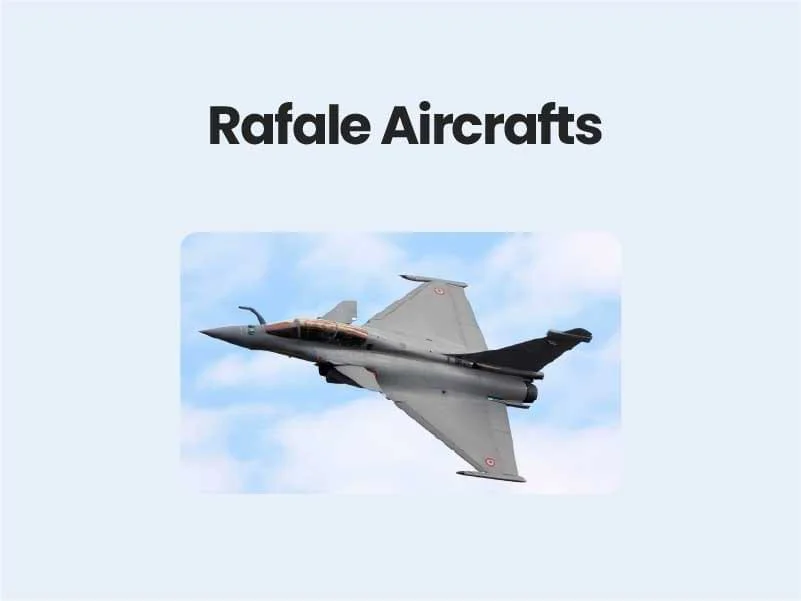
The Rafale are India’s first major acquisition of fighter planes in 23 years after the Sukhoi jets were imported from Russia. Introduced in 2001, the Rafale is a French twin-engine and multirole fighter aircraft designed and built by Dassault Aviation being produced for both the French Air Force and for carrier-based operations in the French Navy. India has inked a Rs 59,000-crore deal in 2016 to procure 36 Rafale jets from French aerospace major Dassault Aviation after a nearly seven-year exercise to procure 126 Medium Multi-Role Combat Aircraft (MMRCA) for the Indian Air Force did not fructify. All the 36 jets will be delivered to India by the end of 2021. The Rafale jets has SCALP, the air-to-ground cruise missile with a range of over 300 km. It is a long-range deep strike missile.
Sub Categorization of Backward Classes
Sub Categorization of Backward Classes Presently, half of these 1,900-odd castes have availed less than three per cent of reservation in jobs and education, and the rest availed zero benefits during the last five years. The central government had appointed the Commission under Justice (Retd) G Rohini in October, 2017. Significance: The Commission was constituted under article 340 of the Constitution with the approval of President on 2nd October, 2017. The Commission, headed by Justice (Retd.) Smt. G. Rohini commenced functioning on 11th October, 2017 and has since interacted with all the States/UTs which have subcategorized OBCs, and the State Backward Classes Commissions. The Commission has come to the view that it would require some more time to submit its report since the repetitions, ambiguities, inconsistencies and errors of spelling or transcription etc. appearing in the existing Central List of OBCs need to be cleared. Hence the Commission had sought extension of its term, up to 31st July 2020. However, due to the nationwide lockdown and restrictions on travel imposed on account of COVID-19 pandemic, the Commission was not able to go perform the task assigned to it. Therefore, the term of the Commission is being extended for a period of 6 more months i.e. up to 31.1.2021. To examine the extent of inequitable distribution of benefits of reservation among the castes or communities included in the broad category of Other Backward Classes with reference to such classes included in the Central List; To work out the mechanism, criteria, norms and parameters in a scientific approach for sub-categorisation within such Other Backward Classes; and To take up the exercise of identifying the respective castes or communities or sub-castes or synonyms in the Central List of Other Backward Classes and classifying them into their respective sub-categories. Arguments against sub-categorisation: The argument is that the test or requirement of social and educational backwardness cannot be applied to Scheduled Castes and Scheduled Tribes. The special treatment is given to the SCs due to untouchability with which they suffer. In a 1976 case, State of Kerala v N M Thomas, the Supreme Court laid down that “Scheduled Castes are not castes, they are class.” In the Jarnail Singh case, the court held that the objective of reservation is to ensure that all backward classes march hand in hand and that will not be possible if only a select few get all the coveted services of the government. Impact including employment generation potential: The Communities in the existing list of OBCs which have not been able to get any major benefit of the scheme of reservation for OBCs for appointment in Central Government posts and for admission in Central Government Educational Institutions are expected to be benefitted upon implementation of the recommendations of the Commission. The Commission is likely to make recommendations for benefit of such marginalized communities in the Central List of OBCs. Read Also Himalayan trillium Expenditure: The expenditure involved are related to the establishment and administration costs of the Commission, which would continue to be borne by the Department of Social Justice and Empowerment. Benefits: All persons belonging to the castes/communities which are included in the Central List of SEBCs but which have not been able to get any major benefit of the existing scheme of reservation for OBCs in Central Government posts & for admission in Central Government Educational Institutions would be benefitted. Implementation schedule: Orders for extension of the term of the Commission and addition in its Terms of Reference will be notified in the Gazette in the form of an Order made by the President, after receipt of the approval of the Hon’ble President to the same. “The constitutional goal of social transformation cannot be achieved without taking into account changing social realities,” the court ruled. Enroll today with the best civils service academy and take your first step towards your Civils journey. Feel free to reach out to us for any inquiries, collaborations, or support. We’re here to help. contact us
Jal Shakti Abhiyan
Jal Shakti Abhiyan The government of India launched Jal Shakti Abhiyan (JSA), a time-bound campaign with a mission mode approach intended to improve water availability including groundwater conditions in the water-stressed blocks of 256 districts in India. In this regard, teams of officers from Central Government along- with technical officers from the Ministry of Jal Shakti were deputed to visit water-stressed districts and to work in close collaboration with district-level officials to undertake the suitable intervention. Significance: ‘Jal Shakti Abhiyan’—is all set to combat the present health crisis and give a boost to the rural economy through its various components. This year owing to the COVID-19 emergency, and the availability of a large labor force in rural areas, the Abhiyan has started gearing up for the impending monsoon. In a first of its case a Joint Advisory has been issued from the Department of Rural Development, Dept. of Water Resources, River Development & Ganga Rejuvenation, Dept. of Land Resources & Dept of Drinking Water & Sanitation to all the Chief Secretaries of all States/ UTs, in context with the impending monsoon this year and the preparations to be done for water conservation and recharge which is of utmost importance for our country. To promote water conservation and water resource management, five target interventions viz. water conservation & rainwater harvesting, renovation of traditional & other water-bodies/tanks, reuse and recharge of bore-wells, watershed development and intensive afforestation etc implemented during JSA. Huge public awareness vis-à-vis water conservation/harvesting has been generated due to JSA and further, it has been observed that various stakeholders, viz. Government departments/agencies, NGOs, Panchayats, individuals, etc. have started taking steps towards water conservation. National Water Mission: To reduce and study the impact of climate change on water resources and to provide a comprehensive water database in the public domain. Promotion of citizen and state actions for water conservation, augmentation, and preservation. To focus on the vulnerable areas including over-exploited areas and also to increase the water use efficiency by 20%. To promote the management of basin level integrated water resources. Important water conservation interventions: Rainwater harvesting Renovation of traditional and other water bodies/tanks Reuse bore well recharge structures Watershed development Intensive afforestation. Enroll today with the best civils service academy and take your first step towards your Civils journey. Feel free to reach out to us for any inquiries, collaborations, or support. We’re here to help. contact us