
Manipur’s Zomi people push for BTC-like council
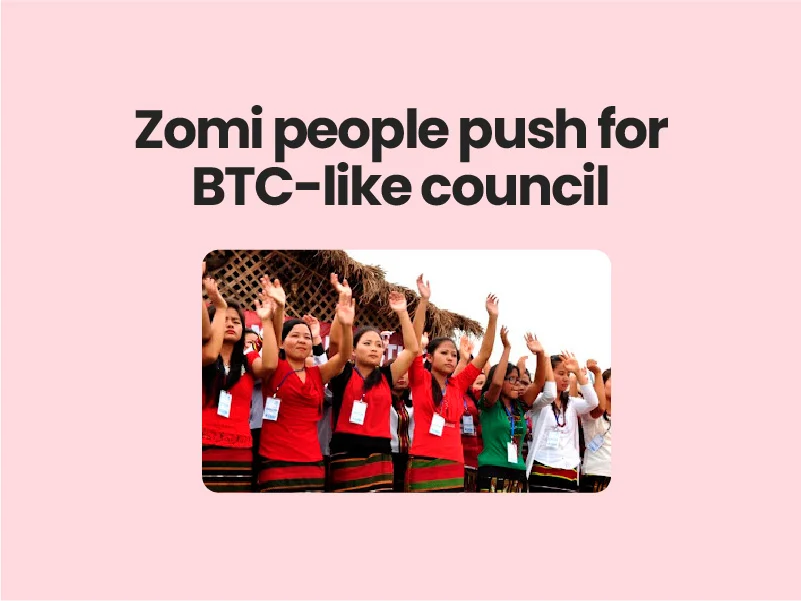
Manipur’s Zomi people push for BTC-like council State’s Zomi ethnic group has renewed its demand for a self-administered zone on the lines of the Bodoland Territorial Council (BTC) in Assam. Zomi council is an apex body of the Zomi tribes which include Gante, Kom, Mate, Paite, Simte, Tedim Chin, Thangkhal, Zou and Vaiphei. The Zomi Council, representing nine Zomi tribes, said it was banking on the decisive leadership of Prime Minister Narendra Modi, Mr. Shah and Manipur Chief Minister Nongthombam Biren Singh for the creation of Zoland Territorial Council (ZTC) under the Sixth Schedule of the Constitution. SoO is the abbreviation for the tripartite suspension of operations among the Centre, the Manipur government and 25 extremist groups belonging to the Kuki-Zomi groups. While 17 of these groups formed the Kuki National Organisation (KNO), eight came together as the United People’s Front (UPF). The SoO agreement was first signed by the underground Zomi Revolutionary Army (ZRA) in 2005. The other groups came on board later. The KNO and UPF had demanded the creation of an autonomous hill state within Manipur . The demand evolved into that of a BTC-like territorial council Bodoland Territorial Council (BTC) : The Bodoland Territorial Council (BTC) is an autonomous district council for the Bodoland Territorial Region in India. It was established in February 2003. The BTC has 40 elected members and an additional six members that are appointed by the Governor of Assam. The area under the BTC jurisdiction is officially called the Bodoland Territorial Region (BTR). The region falls within the geographical map of the least developed region in India. The agro-based economy is the only source of livelihood of the people. Industrialisation and other employment opportunities are scant. Enroll today with the best civils service academy and take your first step towards your Civils journey. Feel free to reach out to us for any inquiries, collaborations, or support. We’re here to help. join now
Rainbow Revolution- National agriculture policy
Rainbow Revolution The policy aimed at achieving a growth rate of over 4 per cent per annum by introducing `rainbow revolution’ in the next two decades so that the total GDP growth can be sustained at 6.5 per cent. In July 2000, the Centre Government of India had announced the first-ever national agriculture policy. The various colors of the Rainbow Revolution indicate various farm practices such as Green Revolution (Foodgrains), White Revolution (Milk), Yellow Revolution (Oil seeds), Blue Revolution (Fisheries); Golden Revolution (Fruits); Silver Revolution (Eggs), Round Revolution (Potato), Pink Revolution (Meat), Grey Revolution (Fertilizers) and so on. Thus, the concept of Rainbow revolution is an integrated development of crop cultivation, horticulture, forestry, fishery, poultry, animal husbandry and food processing industry. Agricultural Scenario of Bihar: Bihar is the third largest state in India with respect to population and seventh largest in area. It supports 8.8 per cent of country’s population with only 2.8 per cent of land mass. Agriculture is an important sector since it generates 16 per cent of State GDP but provides employment to 70 per cent of rural working force. Climate of Bihar is favourable for production of various field crops but agriculture of the state seems to be less dependent on behaviour of monsoon and distribution of rainfall. The state has achieved almost sustainability in agricultural production because the food grain production was 162 lakh tonnesin the next year with only annual rainfall of 774 mm with only 34 rainy days. In Bihar, there was severe drought in 1966 when only 866 mm of monsoon rainfall was received and food grain production was declined by 50 per cent of the normal production level. An increase in food grain production in the state in drought years was made possible due to increase in number of private tube wells installed by farmers. However, the State Government also made some cosmetic efforts for maintaining agricultural production. 1. Green Revolution: M S Swaminathan is the founder of Green Revolution. It is one of the major revolutions in the field of agriculture in India which led to both economic and social changes. It generated employment for the people and increased the food grain production .This revolution has enabled people to use HYV variety of seeds .It has also allowed multiple cropping to take place. 2.White Revolution: Varghese Kurien is the founder of White Revolution. It was started by the Indian government for the sustainance of the dairy industry.The aim of this revolution is to make India self-sufficient in milk and other dairy products.It helped in increasing milk production and improving techniques for the same. Which is the best UPSC Test Series Check Now 3.Yellow Revolution: Sam Pitroda is the founder of Yellow Revolution. It is started for the increase in oilseed production. It is the immediate rise in the production of edible oil due to the plantation of hybrid oil seeds like mustard,sesame etc. 4.Blue Revolution: Dr.Arun Krishnan is the founder of this Revolution. It is the step taken to cultivate the rising aquaculture in this modern age.It deals with the rising amount of fisheries and providing as well as maintaining the rightful amount of conditions for the growth and development of this sector of the society. 5.Golden Revolution: Nirpakh Tutej is the founder of this revolution. It mainly deals with the growth and development in honey production and the horticulture sector.This revolution helped the farmers to gain high profits with increase in the changing cropping patterns and construction of large farms. 6.SilverRevolution: Our former Prime minister Indira Gandhi is the founder of this Revolution.This deals with the increase in poultry farming and egg production.It has been able to meet the needs of the citizens successfully. The application of medical science and other technologies has allowed the development of this sector of agriculture. 7.Red Revolution: Vishal Tewari is the founder of this Revolution. It mainly deals with the cultivation and production of tomatoes and meat.This revolution has enabled the farmers to create a new era of cultivation.It is one of the recent types of revolution. 8.Black/Brown Revolution: This revolution speaks about the cultivation and large production of non-conventional sources of energy. Black Revolution deals with the production and world-wide distribution of petroleum and other related products.Brown revolution deals with the leather production.It is an aid for the clothes and textile industries. 9.Round Revolution: This revolution deals with the production of potatoes. It is one of the major parts of the Green Revolution.Due to the advancement in this sector, the whole agricultural sector has found a new boost.This revolution has paved its way to the increase in economic condition of the nation. 10.Grey Revolution: This revolution has brought massive changes in the whole agriculture sector.It deals with the application of fertilizers to the crops for better crop production. Fertilizers have brought a new change in the cultivation of crops. Benefits of Rainbow Revolution: It keeps a check on the needs of the citizens and provide accordingly. It has been an aid for the production of the best products. It make better supply to the consumers. It’s a boon for the Indian agricultural and husbandry sector. It aims at increasing environmental sustainability as well as development of resources. It promotes organic farming to decrease the use of chemicals and fertilizers. It has made practices like rain water harvesting compulsory. It aims at improving soil testing techniques and other agricultural technologies.It promotes soil health schemes. It takes care of the income of the farmers. It keeps a check on annual growth in agricultural sector. It keeps the farmers informed about miscellaneous plans and programs of the government for their growth and development. It ensures proper market facilities for the farmers without any restrictions on the movement of products. It supplies the farmers with adequate number of go-downs and warehouses . It promotes the agricultural exports with the help of good quality of agri-products. It keeps on maintaining nutritional values of the products. Rainbow Revolution aims at interlinking all sectors of agriculture and husbandry for better efficiency
Great Indian Bustard
Great Indian Bustard Great Indian bustard, (Ardeotis nigriceps), large bird of the bustard family (Otididae), one of the heaviest flying birds in the world. The great Indian bustard inhabits dry grasslands and scrublands on the Indian subcontinent; its largest populations are found in the Indian state of Rajasthan. Conservation Status: In 1994 great Indian bustards were listed as an endangered species on the International Union for Conservation of Nature’s (IUCN) Red List of Threatened Species. By 2011, however, the population decline was so severe that the IUCN reclassified the species as critically endangered. An estimated 50 to 250 mature birds remain. The largest concentration of great Indian bustards, perhaps 175 birds, occurs in the state of Rajasthan. Habitat loss and degradation appear to be the primary causes of decline. Ecologists have estimated that approximately 90 percent of the species’s natural geographic range, which once spanned the majority of northwestern and west-central India, has been lost, fragmented by road-building and mining activities and transformed by irrigation and mechanized farming. Many croplands that once produced sorghum and millet seeds, on which the great Indian bustard thrived, have become fields of sugarcane and cotton or grape orchards. Hunting and poaching have also contributed to the decrease in population. These activities, combined with the species’s low fecundity and the pressure of natural predators, have left the great Indian bustard in a precarious position. In 2012 the Indian government launched Project Bustard, a national conservation program to protect the great Indian bustard, along with the Bengal florican (Houbaropsis bengalensis), the lesser florican (Sypheotides indicus), and their habitats from further declines. The program was modeled after Project Tiger, a massive national effort initiated in the early 1970s to protect the tigers of India and their habitat. Project Great Indian Bustard: Ojective of conservation of the remaining population of critically endangered Great Indian Bustard Ardeotis nigriceps, locally called Godawan, an ambitious conservation program namely, Project Great Indian Bustard Probably more vulnerable to extinction than even tiger, Great Indian Bustard, although it was brought under the umbrella of Wildlife (Protection) Act, 1972, it did not gain attention and remained BPL (Below Protection Line); the Project Bustard can be seen as a dawn of a new era for the conservation of neglected species like Great Indian Bustard which is also the state bird of Rajasthan. The rapid decline in its population across its distribution has already alarmed wildlife experts, ornithologists and bird lovers across the world. The main reasons cited for its decline are habitat loss due to conversion of grasslands to other purposes, anthropogenic and related biotic disturbances during its breeding season and frequent poaching of the species as game bird. A grassland species, Great Indian Bustard, is often considered as indicators of the health of our grasslands or pulse of grassland ecosystem which are unfortunately remained neglected and being considered as wastelands. These grasslands actually play an important role in the economy of the local communities as they support their livestock in terms of grazing. Roughly 15-20 percent of the livestock population of the world resides in India and one can imagine the dependence of them on the grasslands. So there is direct dependence of a major part of human population on these dwindling grasslands of India. Once more than 1000 individuals few decades back, bustard population shrunk to 745 in the year 1978, 600 in 2001, 300 in 2008 and not more than 125 in the current year, 2013. Being custodian of more than 50 percent population of bustard across the world, the desert state of Rajasthan does not want to be a mere spectator of the total extermination of the species across the globe, took up the responsibility for the conservation of this species and its habitat for our future generations by becoming a first state in launching the Project Bustard, initially in the DNP Sanctuary, located in Jaisalmer district of Rajasthan. Way Forward: Intensive Patrolling by the field staff Developing intelligence network in the area. Making of check posts and barriers at strategic locations Creation of a flying squad headed by not below the rank of a range officer. Strengthening of existing Wireless Network Habitat protection through creation of some inviolate areas for the bird by making some closures of appropriate size and restricting anthropogenic pressures Habitat enrichment through planting grasses like Lasiurus sindicus(sewan grass)and providing water facilities like water gazellers. Incentives to farmers and local people for giving information and protection of the species. Involving local people in the eco-development and eco-tourism activities. Generating mass awareness and sensitization among the masses. Continuous monitoring of the species and habitat Enroll today with the best civils service academy and take your first step towards your Civils journey. Feel free to reach out to us for any inquiries, collaborations, or support. We’re here to help. join now
NIRVIK scheme to provide high insurance cover for exporters
NIRVIK scheme to provide high insurance cover for exporters Export Credit Guarantee Corporation of India (ECGC) has introduced ‘NIRVIK’ scheme to ease the lending process and enhance loan availability for exporters. Under the new ‘NIRVIK’ scheme, which is also called the Export Credit Insurance Scheme (ECIS), the insurance cover guaranteed will cover up to 90 percent of the principal and interest. The insurance cover will include both pre and post-shipment credit. The Export Credit Guarantee Corporation of India (ECGC) currently provides credit guarantee of up to 60 percent loss. Objective: The main aim behind introducing the scheme was to enhance the accessibility and affordability of credit for exporters. Its objective was to promote exports from the country by providing credit risk insurance and related services for exports. Benefits of NIRVIK Scheme The decision will help make Indian exports competitive and make ECGC procedures exporter friendly, benefiting MSME exporters with a new scheme for reimbursing taxes, reduced insurance cost and ease of doing business. The insurance cover is expected to bring down the cost of credit due to capital relief, less provision requirement and liquidity due to quick settlement of claims and will ensure timely and adequate working capital to the export sector. Ministry of Commerce was already running a scheme “Export Credit Insurance Scheme” to provide credit risk insurance through ECGC Ltd at cheaper premium. Under this scheme it was covering a loss of 60% of Principal and Interest. But in the newly launched scheme “NIRVIK” this coverage has been increased to 90% of the Principal and Interest. So, if the exporter took Rs. 100 cr loan and he is not able to receive payment because of any aforementioned reasons. then ECGC will pay 90 crore and exporter will have to pay Rs. 10 crore. It was also proposed to subsidise the premium under the Scheme that has to be paid by exporters of certain key sectors. ECGC: The Export Credit Guarantee Corporation of India (ECGC) is a fully government-owned company that was established in 1957 to promote exports by providing credit insurance services. The ECGC provides Export Credit Insurance to Banks (ECIB) to protect the banks from losses on account of export credit at the Pre and Post-Shipment stage given to exporters due to the risks of insolvency or protracted default of the exporter borrower. ECGC Ltd is wholly owned by the Ministry of Commerce and Industry. After the introduction of insurance covers to banks during the period 1962-64, the name was changed to Export Credit & Guarantee Corporation Ltd in 1964. It was changed to ECGC Ltd in August 2014. Enroll today with the best civils service academy and take your first step towards your Civils journey. Feel free to reach out to us for any inquiries, collaborations, or support. We’re here to help. join now
Inner Line Permit – Biggest gift to people of Manipur
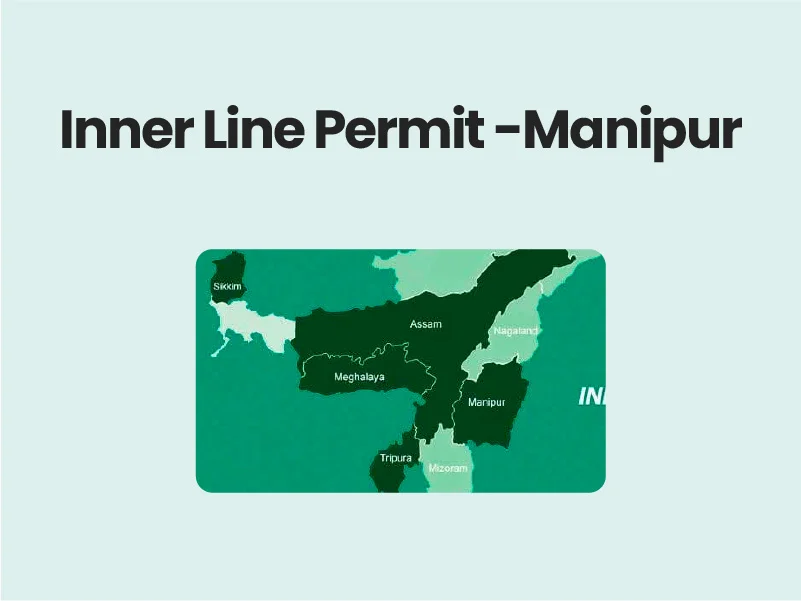
Inner Line Permit biggest gift to people of Manipur The ILP – Inner Line Permit, is an official travel document issued by the concerned state government to allow travel of an Indian citizen into a protected area for a limited period. It is obligatory for the citizens from outside those states to obtain a permit for entering into the protected state. The objective behind this is to prevent settlement of other Indian nationals in ILP states so as to protect the indigenous population and their access to land, jobs, and other facilities. Besides Manipur, Arunachal Pradesh, Mizoram, and Nagaland also come under the Inner Line Permit system. The concept originates from the Bengal Eastern Frontier Regulation Act (BEFR), 1873. For decades, the indigenous people of Manipur had demanded the ILP. Its extension to Manipur implies the exemption of the state from the purview of Citizenship (Amendment) Act. In Manipur, large scale protests have called for its implementation for years. Under the ILP system, a certificate can be issued to outsiders only for travel in the areas covered by ILP. A non-resident also cannot buy property in these areas. Long term residence however, is allowed under certain kinds of ILP. Such provisions though are not valid for Central government employees and security personnel. The other concept is Protected Areas Permit. Under the Foreigners (Protected Areas) Order, 1958, all areas falling between the ‘Inner line’, as defined in the said order, and the International Border of the State have been declared as a Protected Area. Every foreigner, except a citizen of Bhutan, who desires to enter and stay in a Protected or Restricted Area, is required to obtain a special permit from a competent authority delegated with powers to issue such a special permit to a foreigner, on application. Recently, Jammu and Kashmir government has relaxed the Protected Area Permit (PAP) regime to enable foreigners to visit restricted areas in Leh district of Ladakh, a decision which is expected to increase the footfall of tourists and give considerable boost to the local economy. It will create a positive impact on the life and livelihood of the people residing in these remote areas. Although the ILP is not the complete solution or mechanism to control the influx of immigrants, yet it is considered as a tool to at least tackle the issue. Enroll today with the best civils service academy and take your first step towards your Civils journey. Feel free to reach out to us for any inquiries, collaborations, or support. We’re here to help. Join now
HDFC Bank launches ‘e-Kisaan Dhan’ app for farmers
HDFC Bank launches ‘e-Kisaan Dhan’ app for farmers ‘e-Kisaan Dhan’ will provide value-added services like mandi prices, latest farming news, weather forecast, information on seed varieties, SMS advisory, e-pashuhaat, Kisan TV, and more. HDFC Bank announced the launch of ‘e-Kisaan Dhan’ app for farmers allover India. Through this app the farmers will be able to access a bouquet of services, both banking and agriculture, through their mobile phones. The app is a one stop solution for all the information needed on agriculture practices by the farmers. e-Kisaan Dhan App ‘e-Kisaan Dhan’ will provide value-added services like mandi prices, latest farming news, weather forecast, information on seed varieties, SMS advisory, e-pashuhaat, Kisan TV, and more. Users can also avail multiple banking services like procuring loans, the opening of Bank accounts, availing insurance facilities, calculate KCC loan eligibility online, and acquiring Government social security schemes at their fingertips. The app will also help with traditional banking services such as apply for loans, Fixed Deposits, Recurring Deposits, and Savings Accounts. The app, which serves as a repository of knowledge and information for any individual engaged in farming, helps meet needs of the rural ecosystem. The app will also provide value-added services, like mandi prices, latest farming news, weather forecast, information on seed varieties, SMS advisory, e-pashuhaat and Kisan TV, according to a HDFC Bank statement. Users can also avail multiple banking services, like procuring loans, opening bank accounts, insurance facilities, online calculation of KCC loan eligibility, and for acquiring government social security schemes. The app will help with traditional banking services and keep users informed about new government schemes and ways to access them. Read Also Kisan Rail Enroll today with the best civils service academy and take your first step towards your Civils journey. Feel free to reach out to us for any inquiries, collaborations, or support. We’re here to help. Join now
Retrospective Taxation
Retrospective Taxation Retrospective taxation allows a country to pass a rule on taxing certain products, items or services and deals and charge companies from a time behind the date on which the law is passed. The Income Tax authorities slapped Rs. 30,700 crore penalty on Cairn Energy, the erstwhile U.K. parent of India’s largest private sector crude oil producer, Cairn India. The tax authorities are persisting with their demands of collecting retrospective taxes from Vodafone PLC and the U.K.’s Cairn Energy. Apart from India, many countries including the US, the UK, the Netherlands, Canada, Belgium, Australia and Italy have retrospectively taxed companies, which had taken the benefit of loopholes in the previous law. Countries use this route to correct any anomalies in their taxation policies that have, in the past, allowed companies to take advantage of such loopholes. Retrospective Taxation :What is the case?: In May 2007, Vodafone had bought a 67% stake in Hutchison Whampoa for $11 billion. This included the mobile telephony business and other assets of Hutchison in India. In September that year, the India government for the first time raised a demand of Rs 7,990 crore in capital gains and withholding tax from Vodafone, saying the company should have deducted the tax at source before making a payment to Hutchison. Vodafone challenged the demand notice in the Bombay High Court, which ruled in favour of the Income Tax Department. Subsequently, Vodafone challenged the High Court judgment in the Supreme Court, which in 2012 ruled that Vodafone Group’s interpretation of the Income Tax Act of 1961 was correct and that it did not have to pay any taxes for the stake purchase. What happened after India passed the retrospective taxation law? Once Parliament passed the amendment to the Finance Act in 2012, the onus to pay the taxes fell back on Vodafone. The amendment was criticised by investors globally, who said the change in law was “perverse” in nature. Following international criticism, India tried to settle the matter amicably with Vodafone, but was unable to do so. After the new NDA government came to power, it said it would not create any fresh tax liabilities for companies using the retrospective taxation route. By 2014, all attempts by the telco and the Finance Ministry to settle the issue had failed. Vodafone Group then invoked Clause 9 of the Bilateral Investment Treaty (BIT) signed between India and the Netherlands in 1995. Bilateral Investment Treaty: On November 6, 1995, India and the Netherlands had signed a BIT for promotion and protection of investment by companies of each country in the other’s jurisdiction. Among the various agreements, the treaty had then stated that both countries would strive to “encourage and promote favourable conditions for investors” of the other country. The two countries would, under the BIT, ensure that companies present in each other’s jurisdictions would be “at all times be accorded fair and equitable treatment and shall enjoy full protection and security in the territory of the other”. While the treaty was between India and the Netherlands, Vodafone invoked it as its Dutch unit, Vodafone International Holdings BV, had bought the Indian business operations of Hutchinson Telecommunicaton International Ltd. This made it a transaction between a Dutch firm and an Indian firm. The BIT between India and the Netherlands expired on September 22, 2016. Read Also Digital tax Permanent Court of Arbitration at The Hague: India’s retrospective demand of Rs 22,100 crore as capital gains and withholding tax imposed on the British telecommunication company for a 2007 deal was “in breach of the guarantee of fair and equitable treatment”. The court has also asked India not to pursue the tax demand any more against Vodafone Group. One of the major factors for the Court of Arbitration to rule in favour of Vodafone was the violation of the BIT and the United Nations Commission on International Trade Law (UNCITRAL). In 2014, when the Vodafone Group had initiated arbitration against India at the Court of Arbitration, it had done so under Article 9 of the BIT between India and the Netherlands. Article 9 of the BIT says that any dispute between “an investor of one contracting party and the other contracting party in connection with an investment in the territory of the other contracting party” shall as far as possible be settled amicably through negotiations. The other was Article 3 of the arbitration rules of UNCITRAL, which, among other things, says that “constitution of the arbitral tribunal shall not be hindered by any controversy with respect to the sufficiency of the notice of arbitration, which shall be finally resolved by the arbitral tribunal”. In its ruling, the arbitration tribunal also said that now since it had been established that India had breached the terms of the agreement, it must now stop efforts to recover the said taxes from Vodafone. Any retrospective amendment which benefits taxpayers is welcome and non-beneficial retrospective amendment / retrospective tax which is only clarificatory in nature is acceptable. However, any unreasonable and unexpected new tax levy on a transaction which is closed in light of the then existing law would be unfair and cause disruption and validity need to be analysed. Enroll today with the best civils service academy and take your first step towards your Civils journey. Feel free to reach out to us for any inquiries, collaborations, or support. We’re here to help. Join now
Pradhan Mantri KISAN Samman Nidhi
PM KISAN Samman Nidhi PM KISAN Samman Nidhi – With a view to provide income support to all land holding eligible farmer families, the Government has launched PM-KISAN. The scheme aims to supplement the financial needs of the farmers in procuring various inputs to ensure proper crop health and appropriate yields, commensurate with the anticipated farm income. Benefits and Eligibility Pradhan Mantri KISAN Samman Nidhi All land holding eligible farmer families (subject to the prevalent exclusion criteria) are to avail of the benefits under this scheme, as per the recent cabinet decision taken during May 2019. The revised Scheme is expected to cover around 2 crore more farmers, increasing the coverage of PM-KISAN to around 14.5 crore beneficiaries, with an estimated expenditure by Central Government of Rs. 87,217.50 crores for year 2019-20. Earlier, under the scheme, financial benefit has been provided to all Small and Marginal landholder farmer families with total cultivable holding upto 2 hectares with a benefit of Rs.6000 per annum per family payable in three equal installments, every four months. The following categories of beneficiaries of higher economic status shall not be eligible for benefit under the scheme: All Institutional Land holders. Farmer families in which one or more of its members belong to following categories Former and present holders of constitutional posts Former and present Ministers/ State Ministers and former/present Members of LokSabha/ RajyaSabha/ State Legislative Assemblies/ State Legislative Councils,former and present Mayors of Municipal Corporations, former and present Chairpersons of District Panchayats. All serving or retired officers and employees of Central/ State Government Ministries /Offices/Departments and its field units Central or State PSEs and Attached offices /Autonomous Institutions under Government as well as regular employees of the Local Bodies (Excluding Multi Tasking Staff /Class IV/Group D employees) All superannuated/retired pensioners whose monthly pension is Rs.10,000/-or more (Excluding Multi Tasking Staff / Class IV/Group D employees) of above category All Persons who paid Income Tax in last assessment year Professionals like Doctors, Engineers, Lawyers, Chartered Accountants, and Architects registered with Professional bodies and carrying out profession by undertaking practices. The States shall prepare database of eligible beneficiary landholder farmer families in the villages capturing the Name, Age, Gender, Category(SC/ST), Aadhaar Number (in case Aadhaar Number has not been issued then Aadhaar Enrollment Number together with any other prescribed documents for purposes of the identification such as Driving Licence, Voters’ ID Card, NREGA Job Card, or any other identification documents issued by Central/State/UT Governments or their authorities,etc.), Bank Account Number and the Mobile Number of the beneficiaries. In case of beneficiaries in States of Assam, Meghalaya, J&K where Aadhaar number has not been issued to most of the citizens, Aadhaar number shall be collected for those beneficiaries where it is available and for others alternate prescribed documents can be collected for identity verification purposes. Responsibility of identifying the landholder farmer family eligible for benefit under the scheme shall be of the State/UT Government. Enroll today with the best civils service academy and take your first step towards your Civils journey. Feel free to reach out to us for any inquiries, collaborations, or support. We’re here to help. Join now
Kisan Rail
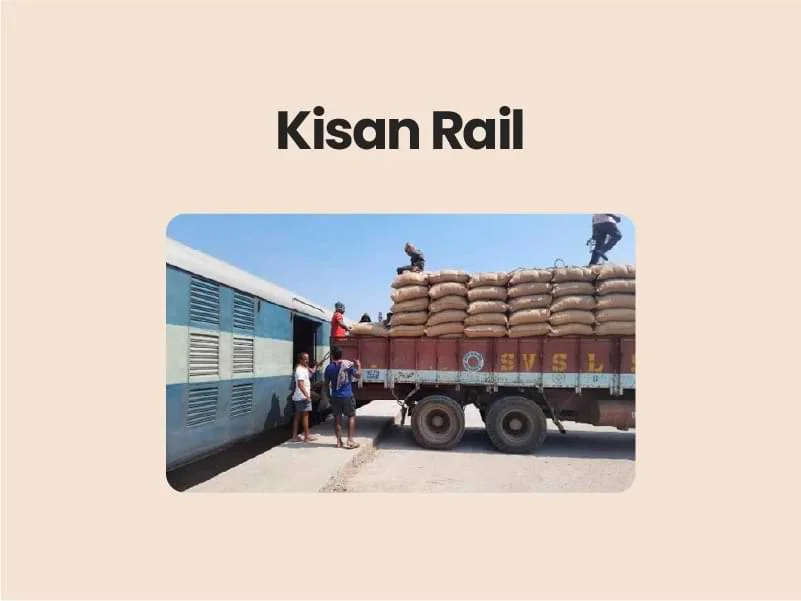
Kisan Rail To build a seamless national cold supply chain for perishables, inclusive of milk, meat and fish, the Indian Railways will set up a “Kisan Rail”- through PPP arrangements. There shall be refrigerated coaches in Express and Freight trains as well.” India’s second and South India’s first Kisan Train commenced its inaugural run from Anantapur in Andhra Pradesh to Adarsh Nagar in New Delhi. Anantapur is fast becoming the Fruit Bowl of Andhra Pradesh. South India’s 1st Kisan Rail train service between Anantapur – New Delhi will cover a distance of 2150 kms in 40 hours. This train is a step towards realising the goal of doubling farmers’ incomes by 2022 (Ashok Dalwai committee on Doubling of Farmers’ Income.) Kisan Rail – Major initiatives Refrigerated Parcel Vans: New design of Refrigerated Parcel Vans (VPR, carrying capacity of 17 tonnes) for transportation of highly perishable parcel traffic was developed, and procured through Rail Coach Factory Kapurthala. At present, Indian Railway has a fleet of nine (09) Refrigerated Parcel Vans available. These Refrigerated Parcel Vans are booked on round-trip basis, and are charged at 1.5 times the freight of normal VP as per category of train. Reefer (Ventilated Insulated) Rail Containers: 98 Ventilated Insulated Containers (Carrying capacity 12 Tonnes per container, rake composition 80 containers) have been procured, through CONCOR, for movement of fruits and vegetables to different parts of the country. Cold Storage Facilities for Perishables: ‘Temperature controlled perishable cargo centres’ have been commissioned at Ghazipur Ghat (U.P), New Azadpur (Adarsh Nagar, Delhi) and Raja ka Talab (U.P) as a pilot project under Kisan Vision Project by CONCOR under CSR initiative. Another project is under construction at Lasalgaon, Nasik (Maharashtra). Read Also Kisan Suryodaya Yojana Approval has been granted to Central Railside Warehousing Corporation (CRWC) to develop temperature controlled storages at Fatuha and Mancheswar. Cold storage facility has also been developed at Dadri. Fresh & Healthy Enterprise Ltd. (FHEL) has been redeveloped as Agriculture Logistic Center at Rai, Sonepat. This facility is CONCOR’s 100% own subsidiary developed in an area of 16.40 acres of land. The first service of the “multi-commodity” Kisan service was launched between Maharashtra’s Devlali and Danapur in Bihar and was later expanded to Muzaffarpur in the eastern state following a good response. Also, it was made a weekly service instead of the initial thrice a week frequency. Since its launch, the Kisan Rail service has transported 27,000 tonnes of agro-services. The Centre has also extended a subsidy of 50% on the transportation of fruits and vegetables. The 100th ‘Kisan Rail’ will run between Sangola in Maharashtra and West Bengal’s Shalimar and, it will carry vegetables such as cauliflower, capsicum, cabbage, drumsticks, chillies, onions, and fruits like grapes, oranges, pomegranate, bananas, custard apples etc. Enroll today with the best civils service academy and take your first step towards your Civils journey. Feel free to reach out to us for any inquiries, collaborations, or support. We’re here to help. Join now
Triratna of Jainism
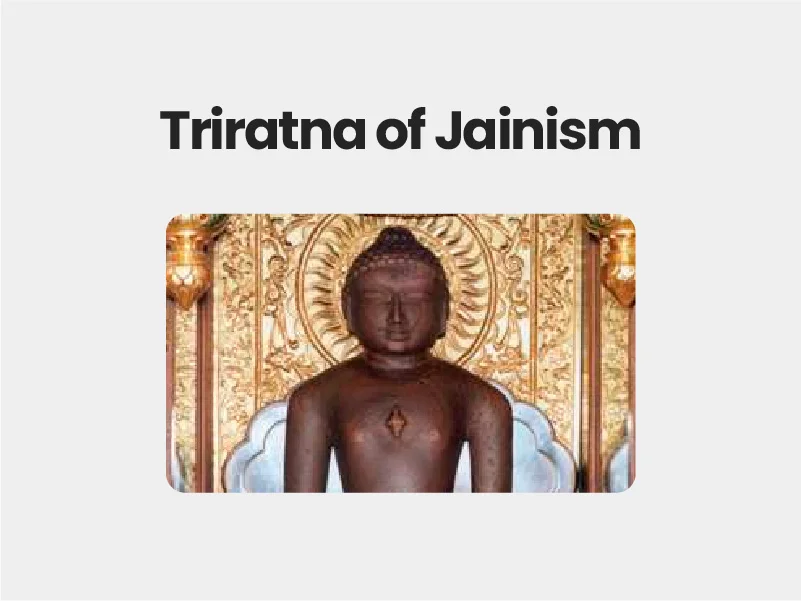
Triratna of Jainism Triratna of Jainism – Triratna, (Sanskrit: “Three Jewels”) Pali Ti-ratana, also called Threefold Refuge, in Buddhism the Triratna comprises the Buddha, the dharma (doctrine, or teaching), and the sangha (the monastic order, or community). One becomes a Buddhist by saying the words “I go to the Buddha for refuge, I go to the Doctrine for refuge, I go to the Order for refuge.” In Jainism the three jewels (also referred to as ratnatraya) are understood as samyagdarshana (“right faith”), samyagjnana (“right knowledge”), and samyakcharitra (“right conduct”). One of the three cannot exist exclusive of the others, and all are required for spiritual liberation. The Triratna is symbolized frequently in art as a trident. The Three Jewels of Jainism The aim of Jain life is to achieve liberation of the soul. This is done by following the Jain ethical code, or to put it simply, living rightly by following the three jewels of Jain ethics. There are three parts to this: right faith, right knowledge and right conduct. The first two are very closely connected. Right faith – Samyak darshana This doesn’t mean believing what you’re told, but means seeing (hearing, feeling, etc.) things properly, and avoiding preconceptions and superstitions that get in the way of seeing clearly. Some books call samyak darshana “right perception”. You can’t achieve this unless you are determined to find the truth, and distinguish it from untruth. Right knowledge – Samyak jnana This means having an accurate and sufficient knowledge of the real universe – this requires a true knowledge of the five (or six) substances and nine truths of the universe – and having that knowledge with the right mental attitude. “if our character is flawed and our conscience is not clear, knowledge alone will not help us achieve composure and happiness”. Today this means having a proper knowledge of the Jain scriptures. Some writers describe right knowledge as meaning having a pure soul; a soul that is free from attachment and desire… others say that a person who has right knowledge will naturally free themselves from attachment and desire, and so achieve peace of mind. Right conduct – Samyak charitra This means living your life according to Jain ethical rules, to avoid doing harm to living things and freeing yourself from attachment and other impure attitudes and thoughts. Jains believe that a person who has right faith and right knowledge will be motivated and able to achieve right conduct. Many Jains believe that a person without right faith and right knowledge cannot achieve right conduct – so it’s no use following scripture and ritual for the wrong reasons (e.g. so that other people will think you are a good person). Not all Jains hold this view. https://youtu.be/4hWOiZdWiiQ Enroll today with the best civils service academy and take your first step towards your Civils journey. Feel free to reach out to us for any inquiries, collaborations, or support. We’re here to help. Join now