
Climate Ambition Summit 2020
Climate Ambition Summit 2020 The UK will host the 26th UN Climate Change Conference of the Parties (COP26), with its partner Italy. The COP26 summit will bring parties together to accelerate action towards the goals of the Paris Agreement and the UN Framework Convention on Climate Change. The COP26 Presidency will demonstrate the urgency and the opportunities of the journey towards a zero carbon economy and the power of international cooperation to address the gravest challenges the world faces. The UK is committed to working with all countries and joining forces with civil society, business and people on the frontline of climate change to inspire climate action as we head towards this vital moment. We will champion inclusivity throughout our COP Presidency and use our position to empower and amplify the voices of those whose views are often most marginalised, addressing their needs and priorities in the run up, and at the COP itself. This Summit marks the fifth anniversary of the Paris Agreement – the most ambitious step in our fight against Climate Change. Climate Ambition Summit- India: India is not only on track to achieve its Paris Agreement targets, but to exceed them beyond expectations. India have reduced emission intensity by 21% over 2005 levels. India solar capacity has grown from 2.63 GigaWatts in 2014 to 36 GigaWatts in 2020. Our renewable energy capacity is the fourth largest in the world. It will reach 175 GigaWatts before 2022. And, India have an even more ambitious target now – 450 GigaWatts of renewable energy capacity by 2030. India have also succeeded in expanding our forest cover and safeguarding our biodiversity. And, on the world stage, India has pioneered two major initiatives: The International Solar Alliance, and Coalition for Disaster Resilient Infrastructure. In 2047, India will celebrate 100 years as a modern, independent nation. Centennial India will not only meet its own targets, but will also exceed our expectations. Enroll today with the best civils service academy and take your first step towards your Civils journey. Feel free to reach out to us for any inquiries, collaborations, or support. We’re here to help. join now
The United Nations Alliance of Civilizations (UNAOC)
The United Nations Alliance of Civilizations (UNAOC) The Alliance maintains a global network of partners including states, international and regional organizations, civil society groups, foundations, and the private sector to improve cross-cultural relations between diverse nations and communities. The United Nations Alliance of Civilizations High Representative and Secretariat are based and operating from New York. It was established in 2005, as the political initiative of Mr. Kofi Annan, former UN Secretary-General and co-sponsored by the Governments of Spain and Turkey. India said the UNGA statement welcomed the Kartarpur Gurdwara corridor agreement between India and Pakistan, but failed to note that Pakistan’s government has taken over the management of the Sikh shrine, which it called a contravention of the agreement and a violation of Sikh beliefs. India asked the United Nations to recognise violence being meted out against religious minorities such as Hinduism, Buddhism, Jainism and Sikhism, and not just those pertaining to the three large Abrahamic religions of Judaism, Christianity and Islam. India –UNAOC: India pointed out that previous resolutions of the UNAOC dating back to 2006 had repeatedly decried the hatred against those religions “Islamophobia, Christianophobia and anti-Semitism” However, the body didn’t condemn attacks on other religious groups including Hindus, Sikhs and Buddhists, who have suffered terror strikes and seen their shrines destroyed in Afghanistan and Pakistan. The UNGA statement welcomed the Kartarpur Gurdwara corridor agreement between India and Pakistan. The world body failed to note that Pakistan’s government has taken over the management of the Sikh shrine, which it called a contravention of the agreement and a violation of Sikh beliefs. India’s delegate also accused Pakistan of a “culture of hatred” against “religions in India” and fostering cross-border terrorism. UNAOC only serves to further the theory of an inevitable “clash of civilisations”. UNAOC portrays only three religions as victims of religious hatred. It is important that they are broadened to include every community that faces religion-based violence. It is also important that the government thwarts Pakistan’s particularly insidious attempts to create a controversy against India at this time, by pushing these resolutions as India steps to take its two-year seat at the UN Security Council. India has been concerned by an increase in intrusive language from the UN bodies concerned as well, given that UNAOC issued a statement of “grave concern” over the Delhi riots this year that it said resulted in casualties of “mostly Muslims”. India is keen to push back on the UNAOC and other UN arms, like the UN Human Rights Council, that have criticised the Citizenship (Amendment) Act. Way forward: The Indian government must be careful about ensuring that in exposing the UN’s “selectivity” it doesn’t leave scope for a counter-charge against India. For example, the Citizenship (Amendment) Act has been criticised for offering fast-track citizenship to only a select group of religions, leaving out Muslims. India cannot call for a culture of peace while Indian States bring laws that seek to make difficult inter-faith marriages. In all, India’s stance against the UN bodies gains force from its own secular credentials enshrined in the Constitution. It is high time that India preserves its own secular ideals and pluralistic ethos. Enroll today with the best civils service academy and take your first step towards your Civils journey. Feel free to reach out to us for any inquiries, collaborations, or support. We’re here to help. join now
Changing Paradigms of Human Rights
Changing Paradigms of Human Rights Human rights are the rights a person has simply because he or she is a human being. and are held by all persons equally, universally, and forever. “All human beings are born free and equal in dignity and rights. They are endowed with reason and conscience and should act towards one another in a spirit of brotherhood. Different counties ensure these rights in different way. In India they are contained in the Constitution as fundamental rights, i.e. they are guaranteed statutorily. In the UK they are available through precedence, various elements having been laid down by the courts through case law. In addition, international law and conventions also provide certain safeguard Basic Requirements for Human Rights – Any society that is to protect human rights must have the following characteristics-1. A de jure or free state in which the right to self-determination and rule of law exist.2. A legal system for the protection of human rights.3. Effective organized (existing within the framework of the state) or unorganized guarantees. Classification – Human rights have been divided into three categories: First generation rights which include civil and political rights. Second generation rights such as economic, social and cultural rights. Third generation rights such as the right of self-determination and the right to participate in the benefits from mankind’s common heritage. Approaches To Human Rights: The Historical Approach The Positivist Approach The Marxist Approach The Social Science Approach Universal Declaration : The Universal Declaration of Human Rights articulates fundamental rights and freedoms for all. The General Assembly of the United Nations adopted the Declaration on 10 December 1948. The Universal Declaration includes civil and political rights, like the right to life, liberty, free speech and privacy. It also includes economic, social and cultural rights, like the right to social security, health and education. The Universal Declaration is not a treaty, so it does not directly create legal obligations for countries. However, it is an expression of the fundamental values which are shared by all members of the international community. And it has had a profound influence on the development of international human rights law. Some argue that because countries have consistently invoked the Declaration for more than sixty years, it has become binding as a part of customary international law. Further, the Universal Declaration has given rise to a range of other international agreements which are legally binding on the countries that ratify them. These include: the International Covenant on Civil and Political Rights (ICCPR) and the International Covenant on Economic, Social and Cultural Rights (ICESCR). Issues: It is not the state but the international community that is meant to safeguard third generation rights, accountability is impossible to guarantee. It is not the state but the international community that is meant to safeguard third generation rights, accountability is impossible to guarantee. Conclusion: The efficacy of the mechanisms in place today has been questioned in the light of blatant human rights violations and disregard for basic human dignity in nearly all countries in one or more forms. In many cases, those who are to blame cannot be brought to book because of political considerations, power equations etc. When such violations are allowed to go unchecked, they often increase in frequency and intensity usually because perpetrators feel that they enjoy immunity from punishment. Enroll today with the best civils service academy and take your first step towards your Civils journey. Feel free to reach out to us for any inquiries, collaborations, or support. We’re here to help. join now
Bharathi Festival
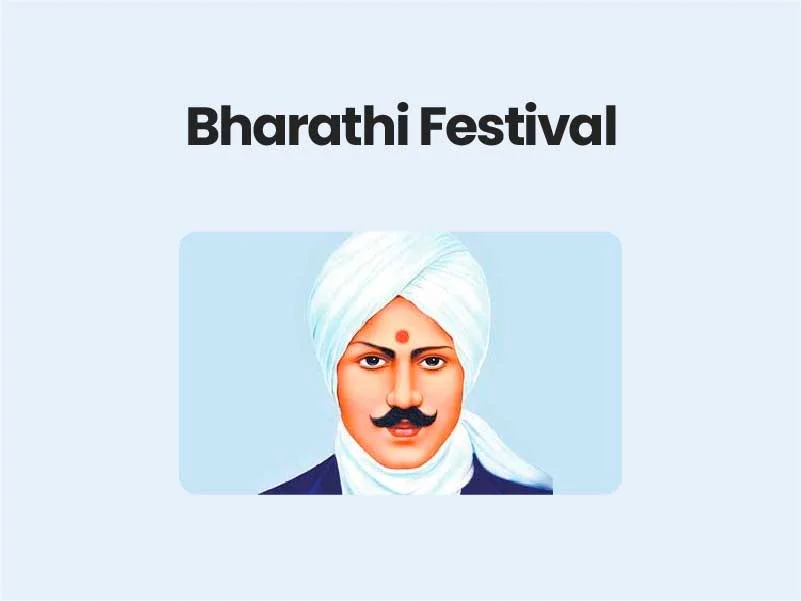
Bharathi Festival Prime Minister Shri Narendra Modi addressed International Bharathi Festival 2020 through video conferencing and paid tributes to the Bharathiyar on his Jayanti. The festival is being organised by Vanavil Cultural Centre to celebrate the 138th birth anniversary of Mahakavi Subramanya Bharathi. The Prime Minister Congratulated the Scholar Shri Seeni Viswanathan, for receiving the Bharathi Award for this year who was presented the award during the event. Subramanya Bharati Subramanya Bharati was a poet, journalist, editor, writer, freedom fighter, social reformer, humanist and much more and one can only marvel at his poems, works, philosophy and his life. While highlighting the works of Subramanya Bharati, Prime Minister Modi noted that in his definition of progression, women had a central role and one of the most important vision was that of empowered and independent women. Bharati’s remarkable works include the fiery songs filled with patriotism during India’s Independence Movement. His influence specifically on Tamil literature is phenomenal even though he was fluent in 14, including 3 non-Indian foreign languages. Subramanya’s Bharati’s favourite language was Tamil and his work included social, political, and spiritual themes. His songs and poems are often used in Tamil Cinema and his work also paved the way for modern blank verse. Subramanya Bharati is also known for his work against the caste system in Hindu society. Even though he was born in an orthodox Brahmin family, Bharati always considered all living beings equal. He also performed Upanayanam for a young man from the Dalit community and made him a Brahmin.
Ek Bharat Shreshtha Bharat
Ek Bharat Shreshtha Bharat Ek Bharat Shreshtha Bharat programme aims to enhance interaction & promote mutual understanding between people of different states/UTs through the concept of state/UT pairing. The states carry out activities to promote a sustained and structured cultural connect in the areas of language learning, culture, traditions & music, tourism & cuisine, sports and sharing of best practices, etc. Significance: All States and UTs will be covered under the programme. There will be pairing of States/UTs at national level and these pairings will be in effect for one year, or till the next round of pairings. The State/UT level pairings would be utilized for state level activities. District level pairings would be independent of the State level pairings. The activity will be very useful to link various States and Districts in annual programmes that will connect people through exchanges in areas of culture, tourism, language, education trade etc. Citizens will be able to experience the cultural diversity of a much larger number of States/UTs while realising that India is one. Objectives: To CELEBRATE the Unity in Diversity of our Nation and to maintain and strengthen the fabric of traditionally existing emotional bonds between the people of our Country; PROMOTE the spirit of national integration through a deep and structured engagement between all Indian States and Union Territories through a year-long planned engagement between States; To SHOWCASE the rich heritage and culture, customs and traditions of either State for enabling people to understand and appreciate the diversity that is India, thus fostering a sense of common identity; TO ESTABLISH long-term engagements and TO CREATE an environment which promotes learning between States by sharing best practices and experiences. Themes: To celebrate the idea of India as a nation wherein different cultural units across varied geographies coalesce and interact with each other, this glorious manifestation of diverse cuisine, music, dance, theatre, movies & films, handicrafts, sports, literature, festivals, painting, sculpture etc. will enable people to imbibe the innate chord of binding and brotherhood. To make our people aware about the seamless integral hull of the Modern Indian State spread across a landmass of 32 lakh sq. km, on whose firm foundations, the geo-political strength of the country is ensured benefitting one and all. To impress upon people at large about the increasing inter-connectedness between the constituents of various cultural & economic zones which is so vital for the spirit of nation building. To induce a sense of responsibility & ownership for the nation as a whole through these close cross-cultural interactions as it intends to build up the inter-dependence matrix unequivocally. To further promote inter-state travel for boosting business activities of various hues. To create a learning ecosystem between the various stakeholders of the partnering states so that they benefit from the best practices of one another by establishing a State to State Connect. Free General Studies Notes Visit Engagement matrix between states and UTs Jammu & Kashmir Tamil Nadu & Andhra Pradesh Himachal Pradesh & Kerala Uttarakhand & Karnataka Haryana & Telangana Rajasthan & West Bengal Gujarat & Chhaftisgarh Maharashtra & Odisha Goa & Jharkhand Delhi & Sikkim & Assam Madhya Pradesh & Manipur & Nagaland Uttar Pradesh & Arunachal Pradesh & Meghalaya Bihar & Tripura & Mizoram Chandigarh & Dadra & Nagar Haveli Puducherry & Daman & Diu Lakshadweep & Andaman & Nicobar Illustrative List of Activities under Ek Bharat Shreshtha Bharat Cultural Exchange Programmes between partnering States with the help of troupes identified in the home State through Cultural Competitions. Translation of at least 5 Award Winning Books and Poetry, popular folk songs of One State in the Language of the partner State. Identification, translation and dissemination of proverbs having similar meaning in the languages of the two States. Exchange programme for Writers and poets. Organize Culinary festivals with opportunity to learn culinary practices. Organize Educational Tours for schools/Universities Students reciprocally. Promotion of Home Stay for visitors. Promotion of Rajya Darshan for tourists. Organising Familiarisation Tours for the Tour Operators of one State. Exposure of students of one State to alphabets, songs, proverbs and 100 sentences in the languages of the partner State. Prepare and share with the partner States a book containing information on their culture, customs, traditions, flora & fauna etc. for dissemination to schools and colleges. Encouraging the administration of oaths / Pledges in the languages of the pairing states. Organising Essay Competition among students in the language of the partner State. Organising Optional Classes in schools / colleges, where feasible, for learning the language of the partner State. Organising Drama(s) of partner State in the educational institutions. Exchange of information on traditional agricultural practices and forecasting among farmers in partner States. Organising combined Tableau and participation of Parade Contingents of Partner States on ceremonial occasions. Telecasting / Broadcasting of programmes of one State on the Regional Radio channels of Partner States. Organising Film Festivals in the partner State with sub-titles. Showcase wearing of traditional attire of the partner State. Organising National/ State Specific Quiz Competitions in various languages on TV / Radio / Ek Bharat Shreshtha Bharat website. Organising Photography competitions highlighting culture and heritage of the partner State Encourage learning and exposure to traditional sports of the partner States. Time and technology have narrowed down distances in terms of connect and communication. In an era that facilitates mobility and outreach, it is important to establish cultural exchanges between people of different regions, as a means to further human bonding and a common approach to nation-building. Mutual understanding and trust are the foundations of India’s strength and all citizens should feel culturally integrated in all corners of India. Students from the north-east, for example, should not feel like ‘strangers in a strange land’ when they arrive in Delhi, or a person from Uttarakhand should not feel like an outsider in Kerala. Enroll today with the best civils service academy and take your first step towards your Civils journey. Feel free to reach out to us for any inquiries, collaborations, or support. We’re here to
Countering America’s Adversaries Through Sanctions Act (CAATSA)
Countering America’s Adversaries Through Sanctions Act (CAATSA) CAATSA is a United States federal law that imposed sanctions on Iran, North Korea, and Russia. It includes sanctions against countries that engage in significant transactions with Russia’s defense and intelligence sectors. Imposed sanctions: prohibition on loans to the sanctioned person. prohibition of Export-Import bank assistance for exports to sanctioned persons. prohibition on procurement by United States Government to procure goods or services from the sanctioned person. denial of visas to persons closely associated with the sanctioned person. US’s CAATSA law: The Countering America’s Adversaries through Sanctions Act (CAATSA), aims at taking punitive measures against Russia, Iran, and North Korea. The Act primarily deals with sanctions on the Russian oil and gas industry, defence and security sector, and financial institutions, in the backdrop of its military intervention in Ukraine and its alleged meddling in the 2016 US presidential elections. The Act empowers the US President to impose at least five of 12 listed sanctions enumerated in Section 235 on persons engaged in a “significant transaction” with the Russian defence and intelligence sectors. The State Department has notified 39 Russian entities including almost all major Russian defence manufacturing and export companies/entities CAATSA Sanctions and India: There had been much speculation in India about its potential impact on India-Russia defence relations especially in the context of India’s possible purchase of the S-400 missile system. That was because CAATSA was enacted to punish Russia by sanctioning persons engaging in business transactions with the Russian defence sector. It was felt that CAATSA sanctions would make difficult payments in US Dollars to Rosoboronexport for the S-400 purchase. Although CAATSA, meant to discourage exports of Russian defence equipment, was enacted more than a year ago, there were no CAATSA related sanctions until last week even though Rosoboronexport, the export arm of the Russian defence industry, had already concluded contracts worth more than USD eight billion this year. The US imposed CAATSA sanctions on a Chinese entity, the Equipment Development Department (EDD) of China’s Central Military Commission (CMC), and on its Director. The sanctions were in response to China’s purchase of Su-35 aircraft and the S-400 system. CAATSA had not specified any specific sanctions, only that five or more sanctions from a list of 12 had to be imposed on the person whom “the President determines, knowingly engaged in a significant transaction” with a person who is a part of Russia’s defence sector, in this case Rosoboronexport. 11 of the 12 prescribed sanctions will have little or no effect on India’s current dealings with Rosoboronexport, and hence on India-Russia defence relations. However, the twelfth sanction has the potential to completely derail the India-US Defence and Strategic Partnership unless the sanction were to be waived. Reasons behind this exemption: CAATSA impacts Indo-US ties, and dents the image of the US as a reliable partner at a time when it is projecting India as a key player in its Indo-Pacific strategy. US administration for countries like India has favoured relief, citing the “strategic opportunity” that India presents, and also the opportunity “to trade in arms with India”. Indeed, the US defence industry sees India as a major market, Over the last decade, deals with India have grown from near zero to $15 billion. Both in term of the number and value of contracts, the US is way ahead of other major suppliers. The CAATSA exemption also underlines the growing defence and security cooperation that has seen India sign a logistics pact with the US. Also US designated India as a Major Defence Partner, and both countries coming together on Indo-Pacific strategy, the newly resurrected Quad. It also marks an acceptance by the US of the point of principle that as a sovereign country, India cannot be dictated on its strategic interests by a third country. India needs to balance its relation with both Russia and USA, so that its national interest is not compromised. Enroll today with the best civils service academy and take your first step towards your Civils journey. Feel free to reach out to us for any inquiries, collaborations, or support. We’re here to help. join now
Fintech in India
Fintech in India Fintech refers to the novel processes and products that become available for financial services thanks to digital technological advancements. More precisely, the Financial Stability Board defines fintech as ―technologically enabled financial innovation that could result in new business models, applications, processes or products with an associated material effect on financial markets and institutions and the provision of financial services. A recent report by Ernst and Young (2016), Capital Markets: Innovation and the FinTech Landscape identified the following nine technologies or technology-enabled trends that, individually or collectively, facilitates current and future FinTech innovations: Cloud technology Process and service externalization Robotic Process Automation (RPA) Advanced Analytics Digital Transformation Block chain Smart Contracts Artificial Intelligence (AI) Internet of Things According to the report of (KPMG 2016), India is transitioning into a dynamic ecosystem offering fintech start-ups a platform to potentially grow into billion dollar unicorns. From tapping new segments to exploring foreign markets, fintech start-ups in India are pursuing multiple aspirations. The Indian fintech software market is forecasted to touch USD 2.4 billion by 2020 from a current USD 1.2 billion, as per NASSCOM. The traditionally cash-driven Indian economy has responded well to the fintech opportunity, primarily triggered by a surge in e-commerce, and Smartphone penetration. The transaction value for the Indian fintech sector is estimated to be approximately USD 33 billion in 2016 and is forecasted to reach USD 73 billion in 2020 growing at a five-year CAGR of 22 percent. The investor attention has been concentrated towards hitech cities in 2015, with Bengaluru witnessing eleven VC-backed investment deals of USD 57 million, followed by Mumbai and Gurgaon with nine and six deals, respectively. Bengaluru, the start-up capital of India has benefitted from the same and is ranked 15 among the world‘s major start-up cities. Read Also Bad Bank The Future of Fintech in india: Blockchains Alternate lending Robo advisory Digital payments Insurance sector Challenges: In India, acceptance of various cashless modes payments was seen after demonetization notes. The government itself encouraged everyone towards the cashless technologies like digital wallets, Internet banking, and the mobile-driven point of sale (POS). Linking with the Aadhaar card, eKYC, UPI and BHIM had restructured the financial sector in India. After the ban of 500 and 1000 notes, it was reported that digital transactions raised up to 22% in India FinTech start-ups like PayTM saw 435% of more traffic to the websites and Apps. This led to the growth of many FinTech start-ups in India as there are many opportunities to grow. Digital Finance firms have benefited from many government‘s start-up policies. Reserve Bank of India also allowed an easy way to start a FinTech start-up. Government is also providing the financial assistance for start-up‘s up to 1 crore. Customers started accepting the digital currency for both personal and commercial use. Due to various changes in the Indian economy, the financial structure of Indian banks and financial institutions were changed and digital wallet became a mandatory channel for the transfer of payments. Integration of IT with finance led to the increase in the value of digital money like Bitcoins. Crypto currency, Block chain system led to faster transactions of digital payments. Banks like HDFC, Federal Bank etc. linked there official digital transactions with the small startup in India like Startup Village which led to the growth even in small FinTech start-ups. Modernization of the tradition sector of banking and finance had increased more customers, reduced the time and were able to provide fast and quick services to the customers. FinTech industry also has few challenges, like Fintech startups, find a little difficult to reach the growing phase in the business cycle. Collaboration and adoption rate is quite less but the ratio is moving upwards with a 59% increase in the digital payments. Integration of many other techniques like blockchain management, cryptocurrency is not still in a niche stage in India. Transparency of the regulatory issues and hiring of tech personnel are among the key challenges of the Indian FinTech space. Innovation has been a bit limited for the low-income groups. Additionally, mass awareness and internet bandwidth is still a huge roadblock in India. Way Forward: As a coin has two faces even FinTech industry in India also have few challenges, Yet these challenges can be converted into opportunities if a further support is provided by the government. Fintech industry change for the financial services in India. and India’s fastest growing fintech industry in the world. In the feature, Indian fintech software market is forecasted to touch USD 2.4 billion by 2020 from a current USD 1.2 billion, as per NASSCOM. The traditionally cash-driven Indian economy has responded well to the fintech opportunity, primarily triggered by a surge in e-commerce, and Smartphone penetration. The transaction value for the Indian fintech sector is estimated to be approximately USD 33 billion in 2016 and is forecasted to reach USD 73 billion in 2020 growing at a five-year CAGR of 22 percent. The Indian government also focuses on and encourages fintech industry and promote new ideas and innovations refer to the fintech industry. Fintech is an emerging concept in the financial industry. Financial technology innovation in India more advantage for the Indian economy, the fintech services more secure and user-friendly. the fintech services reduce their costs for financial services. Read Also Positive Pay System Enroll today with the best civils service academy and take your first step towards your Civils journey. Feel free to reach out to us for any inquiries, collaborations, or support. We’re here to help. join now
Allowing Corporates to own Bank
Allowing Corporates to own Bank The Reserve Bank of India’s (RBI) internal working group on Friday recommended allowing large companies to set up banks and awarding banking licences to well-managed non-banking financial companies (NBFCs). The RBI panel has recommended that corporates should be allowed to control banks after necessary amendments to the Banking Regulation Act, 1949 to prevent connected lending and exposures between the banks and other financial and nonfinancial group entities. In addition, the group proposed strengthening of the supervisory mechanism for large conglomerates. Internal Working Group (IWG) recommendations: To allow large corporate and industrial houses to promote and run banks in India. “Large corporate/industrial houses may be permitted to promote banks only after necessary amendments to the Banking Regulation Act, 1949. Since the nationalisation of 14 large private banks in 1969, the RBI has not given licenses to large corporate and industrial houses for setting up banks. At present, there are 12 old and nine new private banks (established in the post-1991 period) with the majority of ownership held by individuals and financial entities. Another important recommendation of the IWG is to allow conversion of large non-banking financial companies (NBFCs), including those owned by corporate houses, with assets of Rs 50,000 crore and above and 10 years of operations into full-fledged banks. Why recommend it?: The Indian economy, especially the private sector, needs money (credit) to grow. Far from being able to extend credit, the government-owned banks are struggling to contain their non-performing assets. Government finances were already strained before the Covid crisis. With growth faltering, revenues have plummeted and the government has limited ability to push for growth through the public sector banks. Large corporates, with deep pockets, are the ones with the financial resources to fund India’s future growth. Benefits: Allowing the big corporates into the banking sector the capital requirement can be fulfilled. The opening of more branches and subsequently bringing more people into the banking net. Privatization of banks has been a long-proposed reform in the Indian banking industry. Allowing corporates into the banking sector will further pressurize Public sector banks to become competitive. Concern: The working group’s concerns regarding conflict of interest, concentration of economic power, and financial stability in allowing corporates to own banks are potential risks. Corporate ownership of banks raises the risk of intergroup lending, diversion of funds, and reputational exposure. Also, the risk of contagion from corporate defaults to the financial sector increases significantly. The banking sector in India has been in trouble for the last few years, keeping that in mind the RBI in 2016 had created new guidelines on the limit of lending to a single company. Inequality & Concentration of Wealth Another risk associated with banks owned by industry groups is circular lending. A bank with no connections to business houses can effectively screen loan applicants and thus ensure efficient allocation of funds to accelerate the overall growth of the economy. Conclusion: If the RBI accepts this recommendation, it would lead to a backdoor entry of corporate-owned NBFCs into the banking space. The IWG’s recommendations are unexceptionable in that they bolster prudential norms so that the interests of the depositors are secure and banks and their promoters are not able to game the system Enroll today with the best civils service academy and take your first step towards your Civils journey. Feel free to reach out to us for any inquiries, collaborations, or support. We’re here to help. join now
PM WANI Scheme
PM WANI Scheme PM WANI Scheme – The Union Cabinet chaired by the Prime Minister, Shri Narendra Modi has given its approval for the proposal of DoT for setting up of Public Wi-Fi Networks by Public Data Office Aggregators (PDOAs) to provide public Wi-Fi service through Public Data Offices (PDOs) spread across length and breadth of the country to accelerate the proliferation of Broadband Internet services through Public Wi-Fi network in the country. There shall be no license fee for providing Broadband Internet through these public Wi-Fi networks. The proposal will promote the growth of Public Wi-Fi Networks in the country and, in turn, will help in proliferation of Broadband Internet, enhancement of income and employment and empowerment of people. Salient Features of PM WANI Scheme This Public Wi-Fi Access Network Interface will be known as PM-WANI.PM-WANI eco-system will be operated by different players as described herein under: Public Data Office (PDO): It will establish, maintain, and operate only WANI compliant Wi-Fi Access Points and deliver broadband services to subscribers. Public Data Office Aggregator (PDOA): It will be an aggregator of PDOs and perform the functions relating to Authorization and Accounting. App Provider: It will develop an App to register users and discover WANI compliant Wi-Fi hotspots in the nearby area and display the same within the App for accessing the internet service. Central Registry: It will maintain the details of App Providers, PDOAs, and PDOs. To begin with, the Central Registry will be maintained by C-DoT. Udyamimitra Portal Objectives: While no registration would be required for PDOs, PDOAs and App Providers will get themselves registered with DoT through online registration portal (SARALSANCHAR; https://saralsanchar.gov.in of DoT, without paying any registration fee. Registration shall be granted within 7 days of the application. This is expected to be more business friendly and in line with efforts for ease of doing business. COVID-19 pandemic has necessitated delivery of stable and high speed Broadband Internet (data) services to an increasingly large number of subscribers in the country including areas which do not have 4G mobile coverage. This can be achieved by deployment of Public Wi-Fi. Further, the proliferation of public Wi-Fi will not only create employment but also enhance disposable incomes in the hands of small and medium entrepreneurs and boost the GDP of the country. Proliferation of Broadband Services through public Wi-Fi is a step towards digital India and consequential benefit thereon. No License Fee for providing broadband internet services using public Wi-Fi Hotspots will massively encourage its proliferation and penetration across the length and breadth of the country. Availability and use of Broadband will enhance incomes, employment, quality of life, ease of doing business etc. Benefits It opens up opportunities for community organisations, libraries, educational institutions, panchayats and small entrepreneurs to tap into a whole new ecosystem, purchasing bandwidth from a public data office aggregator to serve local consumers. The WANI system offers an elegant way forward to connect low revenue consumers. Boosts GDP Ease of doing business Enhances Quality of life Financial Inclusion FAME India Scheme Challenges slow network speed Security Risks As per TRAI in 2019, India now has among the cheapest mobile data per GB in the world, with mobile data prices having reduced by 95% in the last five years. Clash with Mobile Telecom Firms Conclusion Executed properly, the public data offices (PDOs) of PM WANI can do what the PCOs did for phone calls, going well beyond ‘ease of doing business’ to genuinely empower citizens. Must ensure true unbundling of hardware, software, apps and payment gateways in the WANI system, as advocated by TRAI, to prevent monopolies. Strong cyber security needed: PM WANI should ensure the public data is protected and safe. In this context, the enactment of the public data protection bill, 2019, is the need of the hour. Enroll today with the best civils service academy and take your first step towards your Civils journey. Feel free to reach out to us for any inquiries, collaborations, or support. We’re here to help. join now
PM KUSUM Scheme
PM KUSUM Scheme Ministry of New and Renewable Energy (MNRE) has launched the Pradhan Mantri Kisan Urja Suraksha evem Utthan Mahabhiyan ( PM KUSUM ) Scheme for farmers for installation of solar pumps and grid connected solar and other renewable power plants in the country. PM Kusum scheme aims to add solar and other renewable capacity of 25,750 MW by 2022 with total central financial support of Rs. 34,422 Crore including service charges to the implementing agencies. The Scheme consists of three components: Component A: 10,000 MW of Decentralized Ground Mounted Grid Connected Renewable Power Plants of individual plant size up to 2 MW. Component B: Installation of 17.50 lakh standalone Solar Powered Agriculture Pumps of individual pump capacity up to 7.5 HP. Component C: Solarisation of 10 Lakh Grid-connected Agriculture Pumps of individual pump capacity up to 7.5 HP. Scheme implementation: State Nodal Agencies (SNAs) of MNRE will coordinate with States/UTs, Discoms and farmers for implementation of the scheme. Components A and C of the Scheme will be implemented in Pilot mode till 31st December 2019. The Component B, which is a ongoing sub-programme, will be implemented in entirety without going through pilot mode. On successful implementation of pilot run of Components A and C of the Scheme, these components would be scaled-up, after getting necessary approval. Component A: Renewable power projects of capacity 500 kW to 2 MW will be setup by individual farmers/ group of farmers/ cooperatives/ panchayats/ Farmer Producer Organisations (FPO). In the above specified entities are not able to arrange equity required for setting up the REPP, they can opt for developing the REPP through developer(s) or even through local DISCOM, which will be considered as RPG in this case. DISCOMs will notify sub-station wise surplus capacity which can be fed from such RE power plants to the Grid and shall invite applications from interested beneficiaries for setting up the renewable energy plants. The renewable power generated will be purchased by DISCOMs at a feed-in-tariff (FiT) determined by respective State Electricity Regulatory Commission (SERC). DISCOM would be eligible to get PBI @ Rs. 0.40 per unit purchased or Rs. 6.6 lakh per MW of capacity installed, whichever is less, for a period of five years from the COD. Read Also Jallikattu Component B Individual farmers will be supported to install standalone solar Agriculture pumps of capacity up to 7.5 HP. CFA of 30% of the benchmark cost or the tender cost, whichever is lower, of the stand-alone solar Agriculture pump will be provided. The State Government will give a subsidy of 30%; and the remaining 40% will be provided by the farmer. Bank finance may be made available for farmer’s contribution, so that farmer has to initially pay only 10% of the cost and remaining up to 30% of the cost as loan. In North Eastern States, Sikkim, Jammu & Kashmir, Himachal Pradesh and Uttarakhand, Lakshadweep and A&N Islands, CFA of 50% of the benchmark cost or the tender cost, whichever is lower, of the stand-alone solar pump will be provided. The State Government will give a subsidy of 30%; and the remaining 20% will be provided by the farmer. Bank finance may be made available for farmer’s contribution, so that farmer has to initially pay only 10% of the cost and remaining up to 10% of the cost as loan. Component C Individual farmers having grid connected agriculture pump will be supported to solarise pumps. Solar PV capacity up to two times of pump capacity in kW is allowed under the scheme. The farmer will be able to use the generated solar power to meet the irrigation needs and the excess solar power will be sold to DISCOMs.CFA of 30% of the benchmark cost or the tender cost, whichever is lower, of the solar PV component will be provided. The State Government will give a subsidy of 30%; and the remaining 40% will be provided by the farmer. Bank finance may be made available for farmer’s contribution, so that farmer has to initially pay only 10% of the cost and remaining up to 30% of the cost as loan. In North Eastern States, Sikkim, Jammu & Kashmir, Himachal Pradesh and Uttarakhand, Lakshadweep and A&N Islands, CFA of 50% of the benchmark cost or the tender cost, whichever is lower, of the solar PV component will be provided. The State Government will give a subsidy of 30%; and the remaining 20% will be provided by the farmer. Bank finance may be made available for farmer’s contribution, so that farmer has to initially pay only 10% of the cost and remaining up to 10% of the cost as loan. Scheme Benefits: The scheme will open a stable and continuous source of income to the rural land owners for a period of 25 years by utilisation of their dry/uncultivable land. Further, in case cultivated fields are chosen for setting up solar power project, the farmers could continue to grow crops as the solar panels are to be set up above a minimum height. The scheme would ensure that sufficient local solar/ other renewable energy based power is available for feeding rural load centres and agriculture pump-set loads, which require power mostly during the day time. As these power plants will be located closer to the agriculture loads or to electrical substations in a decentralized manner, it will result in reduced Transmission losses for STUs and Discoms. Moreover, the scheme will also help the Discoms to achieve the RPO target The solar pumps will save the expenditure incurred on diesel for running diesel pump and provide the farmers a reliable source of irrigation through solar pump apart from preventing harmful pollution from running diesel pump. In light of the long waiting list for electric grid connection, this scheme will benefit 17.5 lakh farmers over a period of four years, without adding to the grid load. Solar power for farming and for fallow lands by extending the Kusum scheme. This could potentially result in 10-15 GW of new capacity creation if it materializes. This